10 Debate Points on Why Private School is Better Than Public School in Nigeria
Choosing the right school for a child in Nigeria is a decision that keeps many parents awake at night. You want the best for your kids, but the system often feels like it’s working against you. While public schools were once the pride of the nation, the current reality paints a very different picture.
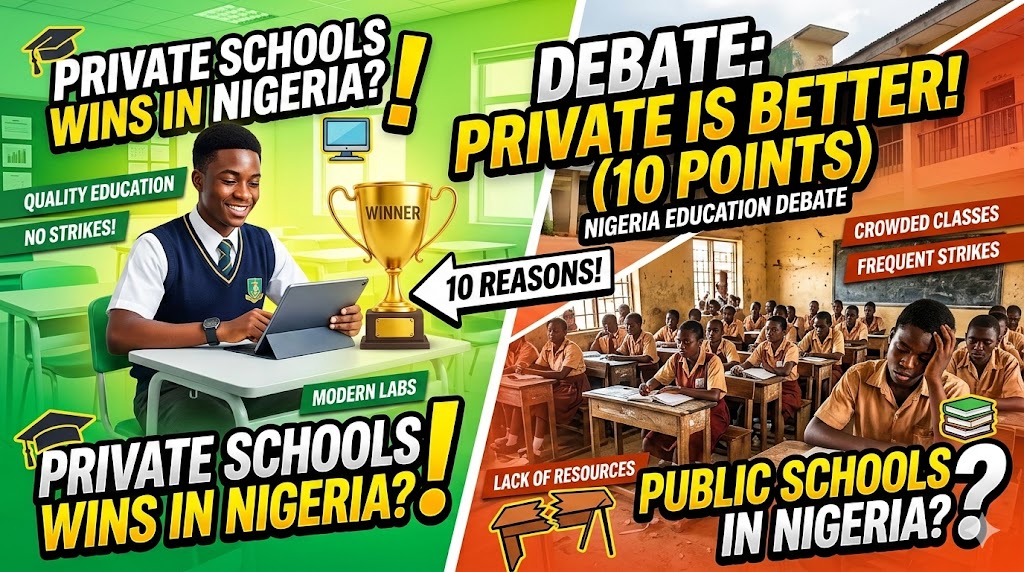
This debate on private school is better than public school in Nigeria highlights why private institutions have become the preferred choice for families seeking quality and consistency.
Let’s be honest: the educational landscape has shifted. While public schools struggle with funding and strikes, private schools have stepped up to fill the gap.
They offer a level of attention and resource management that government-owned schools simply cannot match right now. This article provides clear, logical arguments to help you understand why private education is the winning side of this motion.

1. Better Infrastructure and Learning Environment
The first thing you notice when you walk into a top-tier private school is the environment. Most private schools invest heavily in their buildings, ensuring that classrooms are well-ventilated and conducive to learning. In contrast, many public schools suffer from dilapidated structures and broken furniture, which can dampen a child’s desire to learn.
When a student sits in a comfortable chair in a bright room, they focus better. Private schools prioritize this because they know the environment is the “third teacher.” Having access to clean toilets and functional libraries makes a world of difference in a child’s daily school experience.
2. Higher Teacher Accountability and Performance
In a private school, teachers are held to a very high standard. Their jobs often depend on the academic success and satisfaction of their students. If a teacher isn’t performing or fails to show up for classes, the management takes immediate action. This level of staff supervision is often missing in the public sector.
Public school teachers are government employees, which sometimes leads to a lack of urgency. In private settings, the competition is stiff. Schools want to maintain their reputation, so they ensure their teachers are not just present, but actually teaching effectively. This direct oversight ensures that your child isn’t just a number in a register.
3. Smaller Class Sizes and Individual Attention
One of the biggest wins in this debate on private school is better than public school in Nigeria is the student-to-teacher ratio. In many public schools, you might find sixty or even eighty students crammed into one room. It is impossible for one teacher to monitor the progress of every child in that crowd.
Private schools usually cap their classes at fifteen or twenty-five students. This allows the teacher to identify which child is struggling with math or who needs extra help with reading. This personalized learning approach ensures that no child is left behind, which is a common problem in overcrowded public classrooms.
4. Stability of the Academic Calendar
Nothing kills a student’s momentum like an unexpected strike. In Nigeria, public schools are frequently affected by industrial actions from unions like the NUT or ASUU. These disruptions can turn a four-year course into a six-year struggle. Private schools, however, offer a guaranteed graduation date.
Parents pay for peace of mind. Knowing that the school term will start and end exactly when the calendar says it will allows for better planning. This stability is essential for maintaining a child’s mental focus and ensuring they enter the workforce or higher education on schedule.
5. Integration of Modern Technology
We are living in a digital age, and private schools understand this better than anyone else. Most private institutions have functional computer labs and integrate ICT into their daily lessons. They teach children how to use the internet for research and how to navigate basic software, which are essential digital skills for the 21st century.
Public schools often lack the funds to maintain modern tech equipment. By the time a student in a private school is ten, they are often already comfortable with coding or digital presentations. This technological edge gives them a massive advantage over their peers in the public system who might only see a computer in a textbook.
6. Enrichment Through Extracurricular Activities
Education isn’t just about textbooks and exams. Private schools place a huge emphasis on holistic development, offering clubs like music, drama, ballet, and various sports. These activities help children discover their hidden talents and build confidence outside the classroom.
In public schools, these “extras” are usually the first things to be cut when budgets are tight. A child in a private school gets a well-rounded experience that prepares them for social life and leadership. They learn teamwork on the football field and public speaking in the debate club, things that are often ignored in the public sector.
7. Stronger Security and Safety Measures
Safety is a major concern for every Nigerian parent today. Private schools are generally better at securing their premises. They employ dedicated security personnel, have fenced compounds, and often use CCTV cameras to monitor movement. They are very strict about who picks up a child after school hours.
Public schools are often open-access areas where anyone can walk in or out. This lack of secure perimeters can put children at risk. In a private school, the management understands that they are legally and morally responsible for your child’s safety, and they invest the necessary resources to keep the school a safe haven.
8. Exposure to International Curricula
Many private schools in Nigeria do not just stick to the local syllabus. They blend the Nigerian curriculum with British or American standards. This exposure prepares students for international examinations like the IGSCE or SATs. It opens doors for them to study abroad later in life without feeling overwhelmed.
Public schools are strictly tied to the national curriculum, which can sometimes be outdated. The global competitiveness that private schools offer is a game-changer. It ensures that the Nigerian student can stand shoulder-to-shoulder with their counterparts in London, New York, or Johannesburg.
9. Effective Feedback Loops with Parents
Communication is much better in the private sector. Most private schools use communication diaries, WhatsApp groups, or dedicated apps to keep parents informed about their child’s progress. You get to know exactly what your child ate, what they learned, and where they are struggling.
In public schools, a parent might only hear from the teacher during a rare PTA meeting or at the end of the term. This lack of engagement makes it hard for parents to support their children’s learning at home. Private schools treat parents as partners in the educational journey, which leads to better outcomes for the kids.
10. Better Character Development and Discipline
While some people think private schools are “soft,” the reality is often the opposite. Because of the close supervision, teachers can quickly nip bad behavior in the bud. They focus on value-based education, teaching children about integrity, hard work, and respect.
In an overcrowded public school, bullying and peer pressure can go unnoticed for a long time. The smaller community of a private school makes it easier to foster a culture of discipline. When every teacher knows every student by name, it is much harder for a child to fall into the wrong crowd or lose their way.
Conclusion
The debate on private school is better than public school in Nigeria ultimately comes down to results and reliability. While public schools have the potential to be great, the current lack of funding and oversight makes them a risky choice for many. Private schools offer the quality teacher-to-pupil ratios and modern facilities that our children need to thrive in a competitive world. By choosing private education, you are investing in a stable, secure, and technologically advanced future for your child.
Would you like me to help you draft a formal rebuttal for the opposing side of this debate?