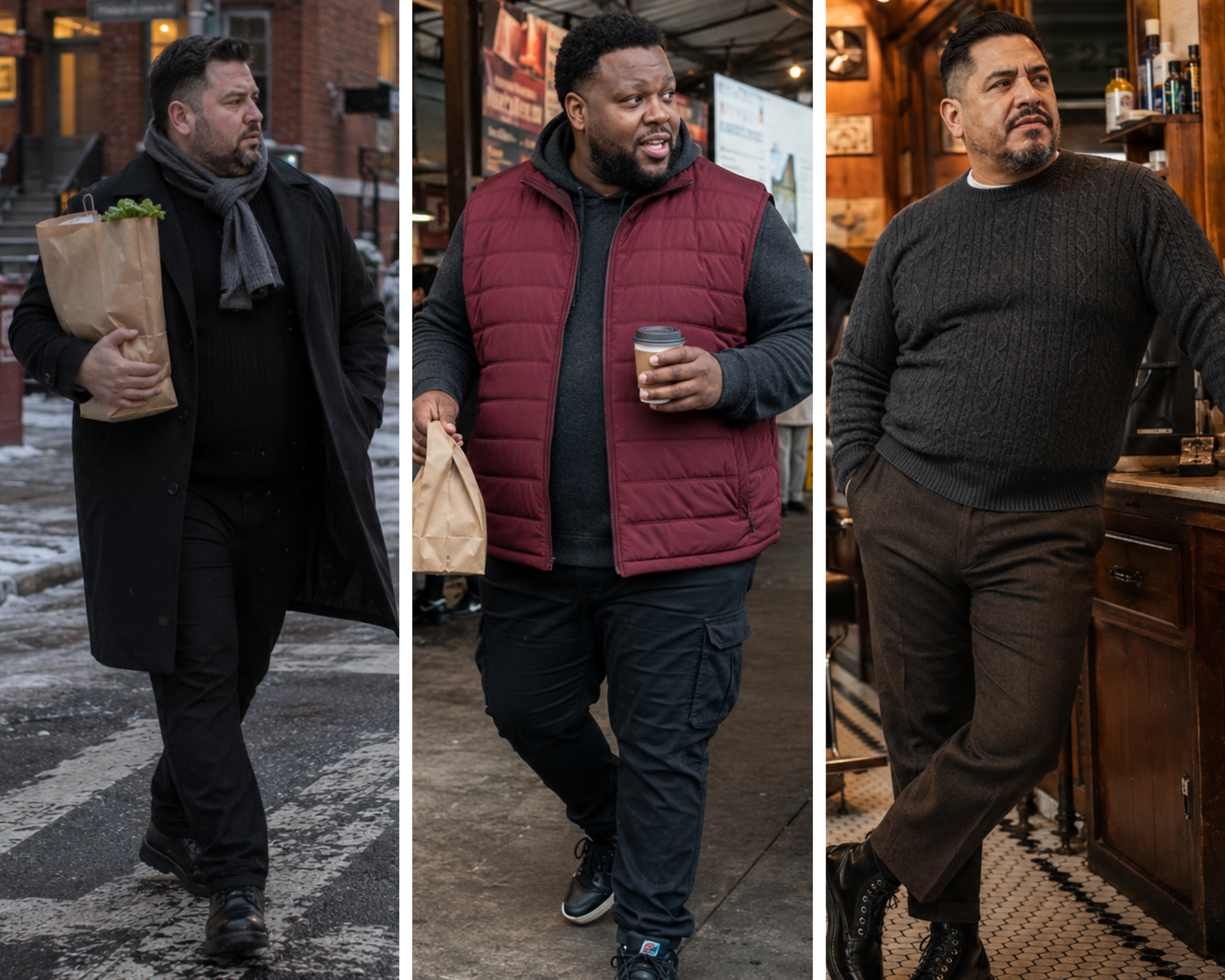
Cold weather hits, and the first jacket you grab barely closes over your hoodie. Most winter clothes seem built for slimmer men. Soon, staying warm starts to feel like choosing between comfort and looking put together.
Real winter style should do both. Layering works best when each piece has room to move without adding too much bulk around your stomach, chest, or arms.
Choose coats that sit cleanly on the shoulders, sweaters that do not cling, and trousers with enough space through the thighs.
Keep darker basics for easy matching, then add colour through scarves, jackets, or knitwear. Look for fabrics that hold warmth without feeling stiff or heavy.
Use longer outer layers when you want more coverage and a cleaner shape. Avoid buying everything oversized, because extra fabric can make you feel bigger and colder.
Finally, these winter outfit ideas show how to stay warm, comfortable, and sharp without dressing around advice that was never made for your body.
Save for later Beach Outfits for Fat Guys That Are Actually Cool and Confident
Camel Overcoat Layered Over a Dark Hoodie
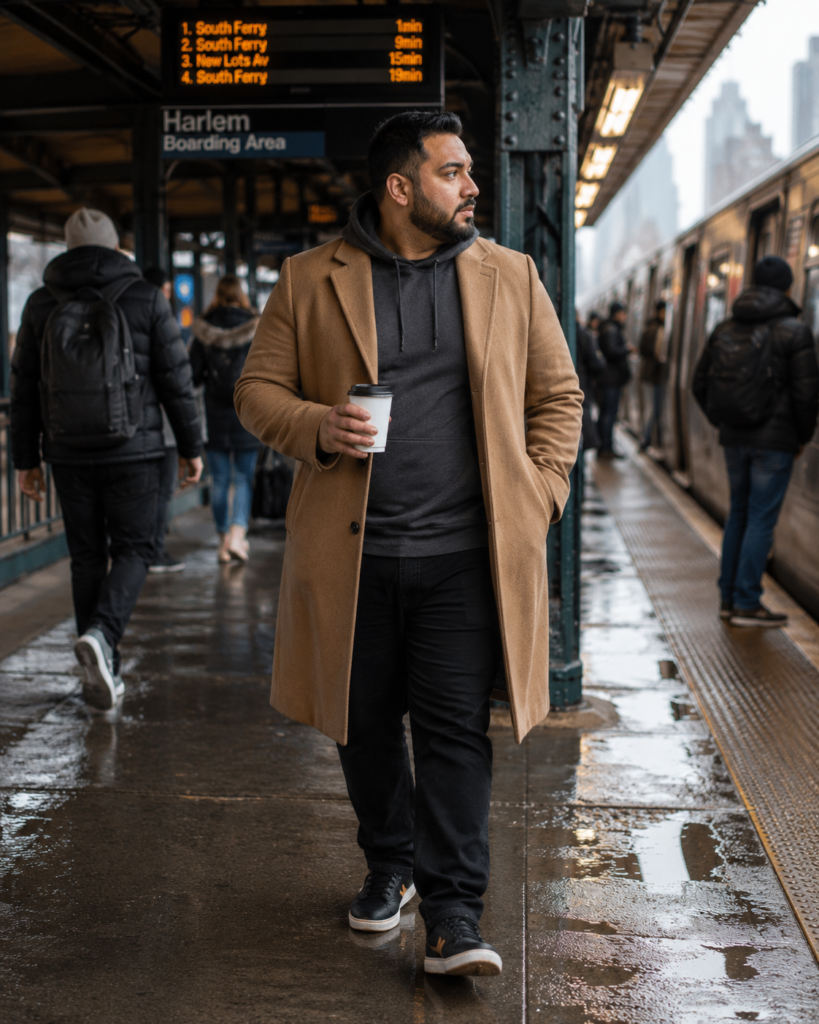
Because your hoodie already adds bulk, the coat over it needs clean shoulders and enough room through the chest and stomach. A camel overcoat reaching mid-thigh keeps the body warm without cutting across its widest point.
Leave it open indoors so the darker layer underneath creates one long centre line. Black straight trousers balance the length of the coat and stop the outfit from feeling top-heavy. Check the sleeves while bending your arms, since a tight coat becomes uncomfortable fast.
Long coats are one of the strongest winter choices for bigger men, but only when the shoulders fit and the front hangs straight.
All-Black Winter Layers With a Grey Scarf
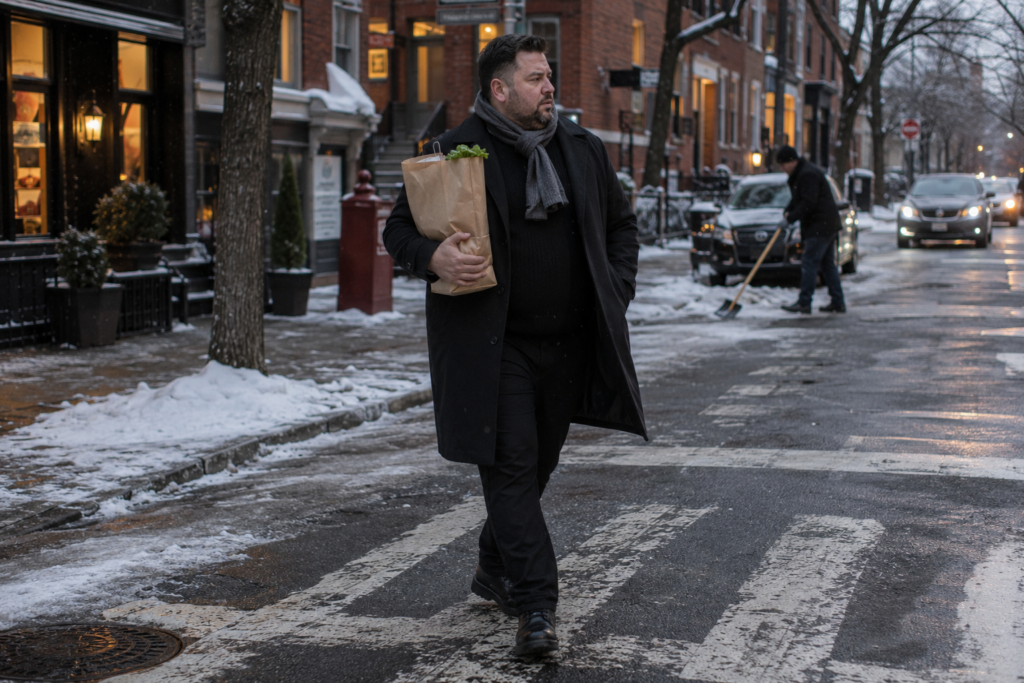
From coat to trousers, one dark colour removes the broken lines that often make a larger frame look shorter. Black also makes winter dressing easier because each layer can be worn again in different combinations.
A grey scarf breaks up the darkness and brings light closer to the face. Mix smooth and knit surfaces so the outfit does not look flat. Keep the trousers straight and the coat long enough to cover the waistband. Clean boots matter more here than anywhere.
All-black dressing looks strong on a bigger man, but faded pieces and dusty shoes will make the whole outfit look tired instead of sharp.
Bookmark this post Big and Tall Groomsmen Outfits That Keep Everyone Looking Uniform
Charcoal Cable-Knit Sweater With Wool Trousers

Right through the chest and stomach, heavy knit patterns can add more shape than you expected. A charcoal cable-knit works best when the pattern stays simple and the sweater falls close without stretching.
Dark brown trousers give the outfit warmth and help separate it from basic black winter dressing. Let the hem finish just below the waistband, not halfway down the thighs. Wear a thin undershirt so the knit does not catch or bunch underneath.
Good knitwear should follow your frame, not fight it, and the right length matters more than hiding behind an oversized sweater.
Taupe Roll-Neck Sweater Under a Black Topcoat

Under a black topcoat, taupe gives the face warmth without placing a bright block across the stomach. Choose a roll neck that folds softly and leaves room around a thick neck. Keep the sweater hem below the waistband, but stop it before the upper thigh.
Pair both layers with charcoal trousers so the colour change stays gentle. Test the neck after ten minutes, not ten seconds. Ignore any knit that scratches, grips, or makes you keep pulling at the collar.
A roll-neck sweater should make a big man look composed, not trapped, and comfort around the neck decides whether the whole outfit works.
Pin this post Plus Size Men Fall Outfits That Are Cozy Without Looking Sloppy
Chocolate Trucker Jacket Over a Cream Half-Zip
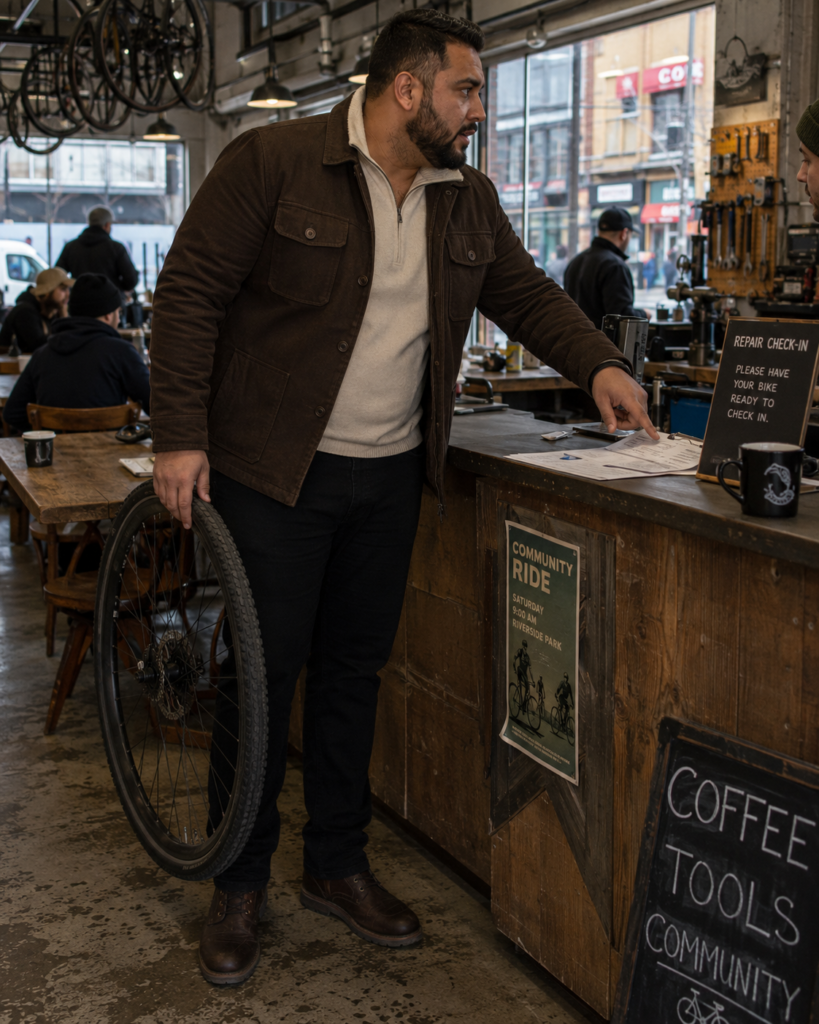
Since the trucker jacket already ends near the waist, the knit beneath must cover the waistband without hanging far below it. Wear the jacket open to avoid a hard line across a fuller stomach. Keep the half-zip slightly lowered so the neck area feels relaxed.
Match the dark trousers with sturdy boots to ground the shorter top layer. Move your arms forward before buying, because lined jackets lose room fast. Avoid tight waistbands that force the jacket to flare outward at the sides.
Brown outerwear brings warmth to winter outfits, but the jacket must sit below the belt and leave enough room through the back and arms.
Burgundy Puffer Jacket With Straight Dark Jeans
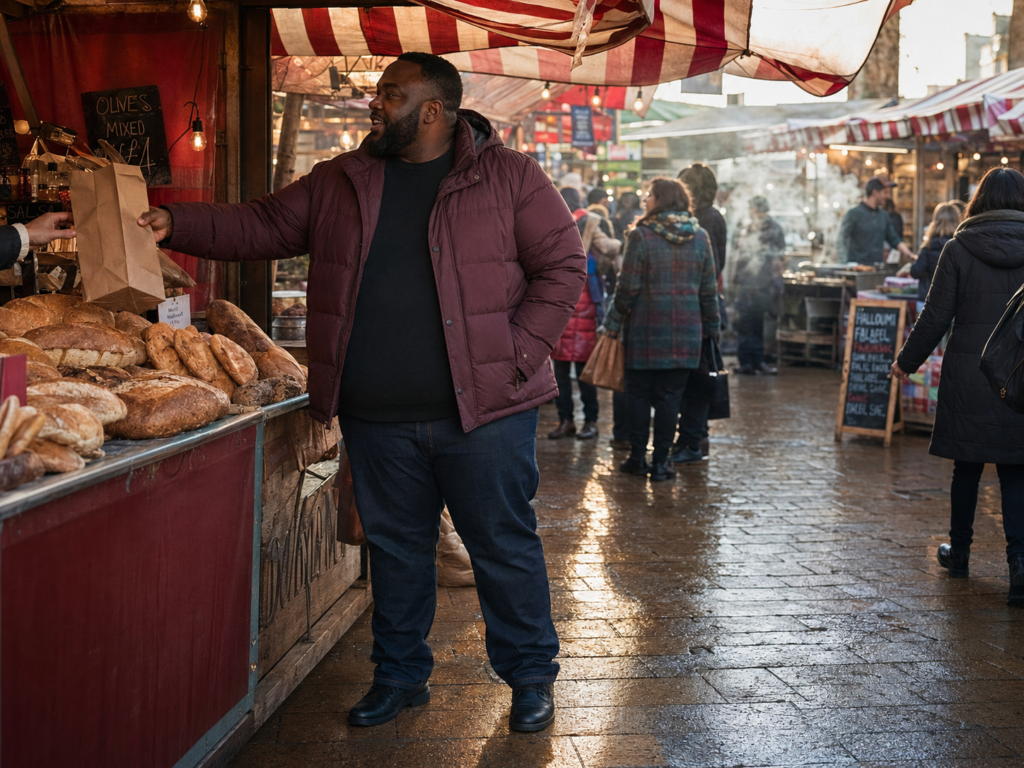
Still, a puffer does not need to turn your upper body into one large block. Choose a jacket that reaches the hip and has room to close without the front sections pulling apart.
Dark jeans keep the lower half simple, while the burgundy colour gives the face more life than plain black. Wear a thinner sweater underneath instead of stacking two thick tops. Look for a jacket hem that sits flat rather than gripping tightly under the stomach.
Short, tight puffers make most big men look wider and feel colder because the jacket keeps riding upward whenever they move.
Check out Creative Industry Workwear for Plus Size Men: Stand Out in the Right Way
Rust Peacoat With a Cream Crewneck Sweater
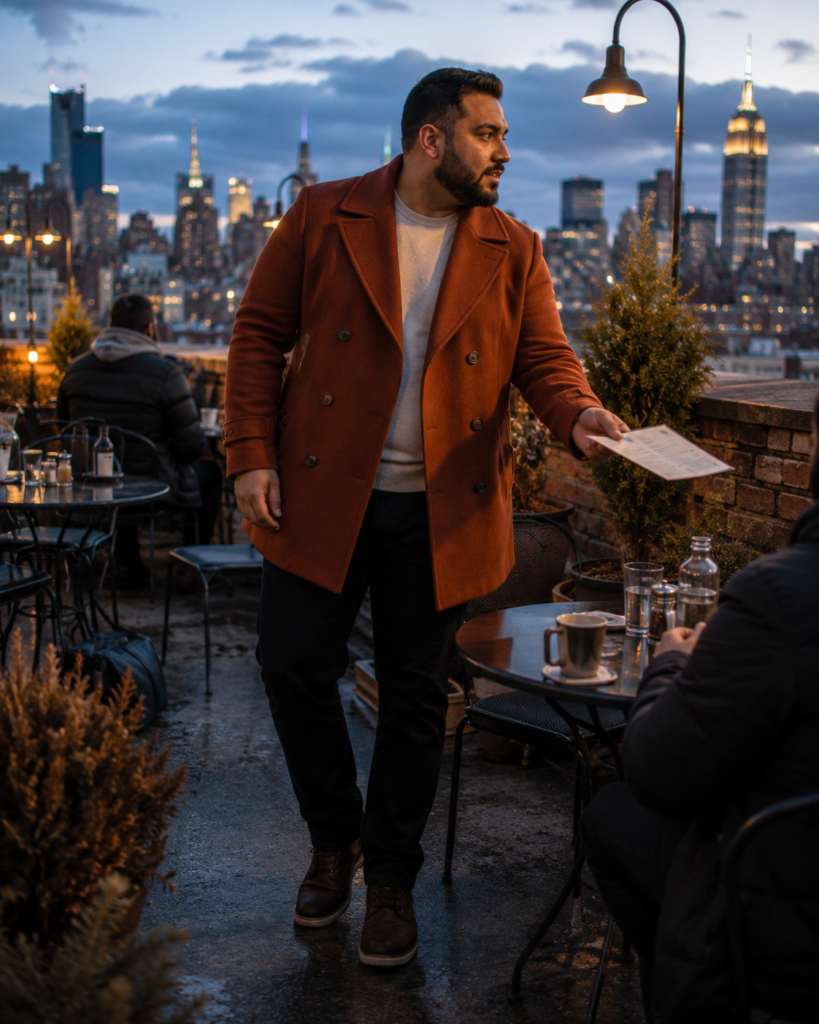
Even with two rows of buttons, a peacoat can work well on a fuller stomach when the front closes without strain. Rust adds colour near the face, while the cream sweater keeps the outfit from looking too dark.
Black chinos make the lower half feel steady and give strong legs a clean line. Test the coat while sitting, since button pulling often appears only after you bend. Keep the sweater thin enough that the coat still moves naturally.
Double-breasted coats are not off-limits for big men, but tight buttons and a short hem will expose every fit problem at once.
Oatmeal Shawl Cardigan With Navy Corduroy Trousers
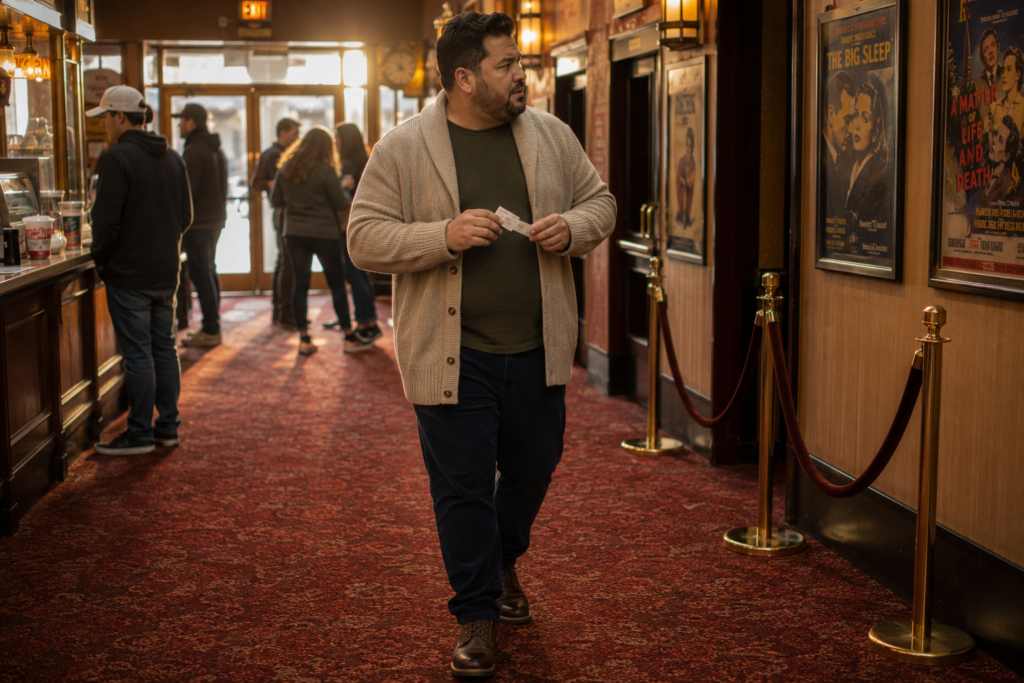
Under an open shawl cardigan, the darker shirt creates a steady centre and keeps the soft outer layer from adding width. Pick a cardigan that reaches below the hips but stops well above the knees.
Keep the collar flat so it frames your neck instead of piling around it. Add navy corduroy trousers for warmth and texture without another bulky top layer. Sit down before deciding on the length. Avoid cardigans with loose hems that curl around the stomach or sag past the seat.
Few winter layers suit a bigger body better than a long open cardigan, because it gives warmth, movement, and clean vertical lines at once.
Save for later Creative Industry Workwear for Plus Size Men: Stand Out in the Right Way
Forest Green Chore Coat Over a Black Turtleneck
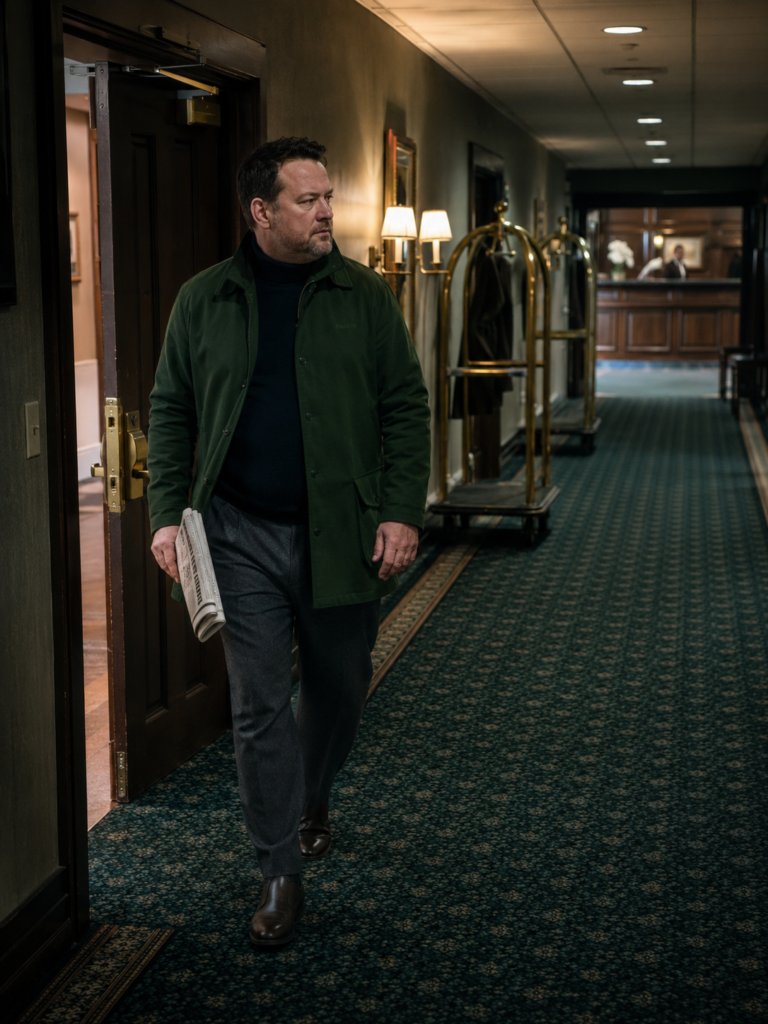
Underneath a structured coat, the turtleneck should create warmth without adding another thick layer around the middle. Black keeps the chest area calm and draws attention toward the face, while the open green coat adds shape through the shoulders.
Charcoal trousers give the lower body room and keep the colour mix grown-up. Pick a turtleneck that sits close without stretching over the stomach. Keep the coat hem below the waistband so it does not stop at your widest point.
A turtleneck looks sharp on a bigger man when the neck feels comfortable and the outer layer stays open enough to frame the body.
Maroon Quilted Vest Over a Thermal Hoodie

With your arms free, a quilted vest keeps the centre warm without adding more bulk around broad shoulders. Choose one that covers the hoodie hem and closes comfortably over your stomach. Wear a thinner thermal hoodie so the vest does not sit stiffly across the chest.
Use straight cargo trousers with flat pockets to give heavy thighs space without widening the hips. Test the armholes by reaching forward. Leave any vest that cuts into your underarms or rises above the waistband.
A quilted vest works best as a controlled middle layer, not as a tight shell squeezed over the thickest hoodie you own.
See more 20 Plus Size Men Workwear Outfits for Every Office Environment
Deep Teal Down Parka With a Monochrome Base
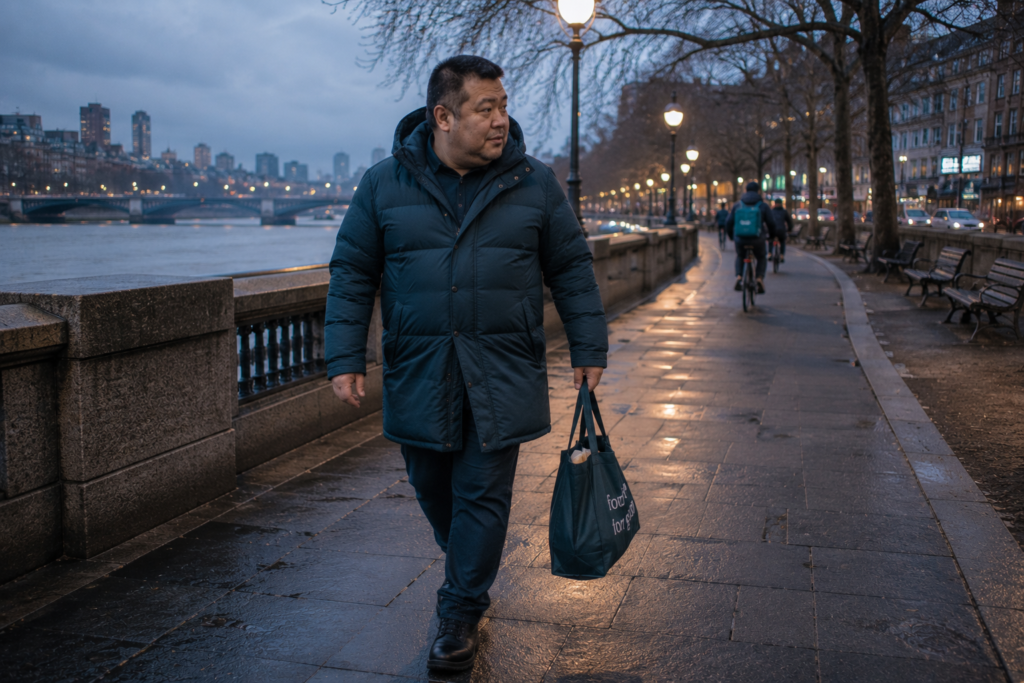
Even a thick parka looks cleaner when the sweater and trousers underneath stay close in colour. Start with a dark teal base to reduce broken lines across a shorter, wider frame. Use a thigh-length coat so the lower stomach and hips stay covered in wind.
Zip it fully before buying, then sit and raise your arms. Choose straight trousers that balance the volume above. Check whether the hem stays down while walking, because tight parkas often creep upward over the belly.
Good parkas protect the whole torso and move with the body, rather than sitting like a padded box around the chest.
Slate Belted Trench Over a Fine Crewneck

Once the trench reaches below the knee, the belt should guide the shape instead of squeezing the middle. Belt it loosely at your side or tie it behind your back when you want a cleaner open front.
Layer a fine crewneck underneath because thick knitwear can crowd the chest and sleeves. Balance the long coat with trousers that fall straight from the hip. Watch how the back moves when you sit. Skip trenches with narrow armholes or a belt placed high above your natural waist.
The belt should shape the coat, never divide your stomach into two parts or force the front panels to pull apart.
Read now How to Choose the Perfect Plus Size Groom Suit for Your Body Shape
Cobalt Sherpa-Lined Denim Jacket With Black Basics

With lining already built into the jacket, the sweatshirt underneath should stay simple and fairly light. Cobalt denim gives the upper body colour, while black jeans and a black top create a cleaner base.
The jacket needs room around the upper arms, since lined sleeves can become tight very quickly. Let the hem sit below the belt so it does not rise above a fuller stomach. Dark boots finish the outfit without adding another bright point.
A lined denim jacket works only when you size for movement, because tight sleeves and a short body will make every layer underneath feel wrong.
Navy Winter Mac With a Mustard Scarf
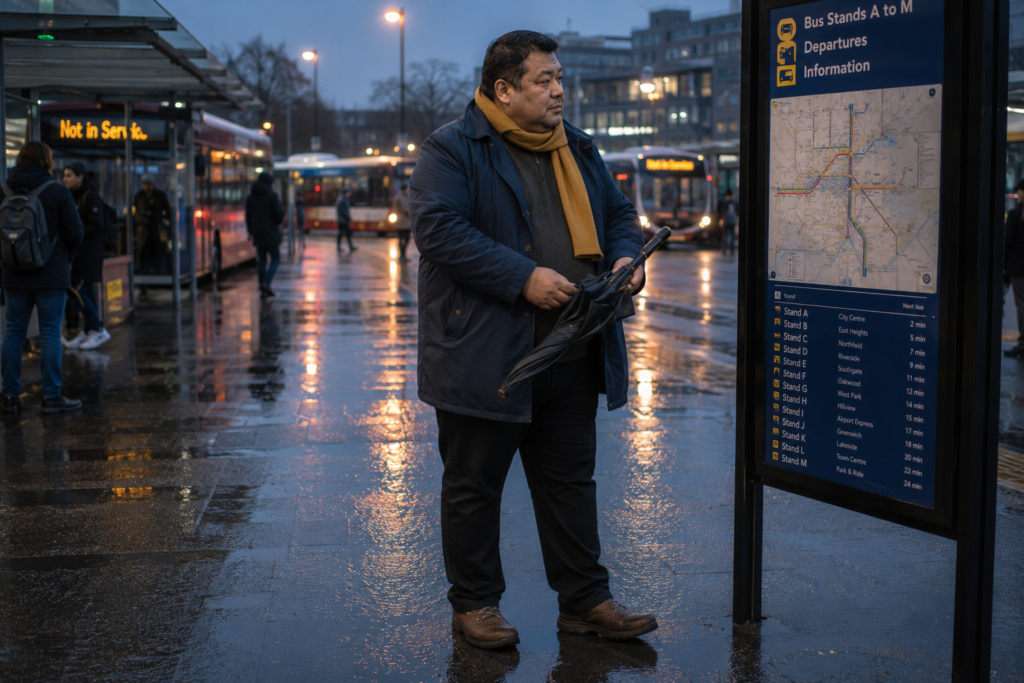
Against a dark winter coat, one strong scarf can do more than three extra clothing colours. Wrap it once so the fabric sits near the face instead of forming a thick knot over the chest. Keep the coat and trousers dark to create a steady base.
Use a mid-thigh mac for rain coverage and better balance through the hips. Check that the scarf does not shed onto the coat. Avoid matching bright gloves, hats, and shoes, because too many colour points will break the body into separate sections.
Colour near the face is the cleanest way to brighten a winter outfit, and one well-placed scarf is enough.
Check out Outfit Ideas for Fat Guys Who Hate Shopping: Looks Built Around What You Already Own
Espresso Car Coat With a Ribbed Mock-Neck Knit
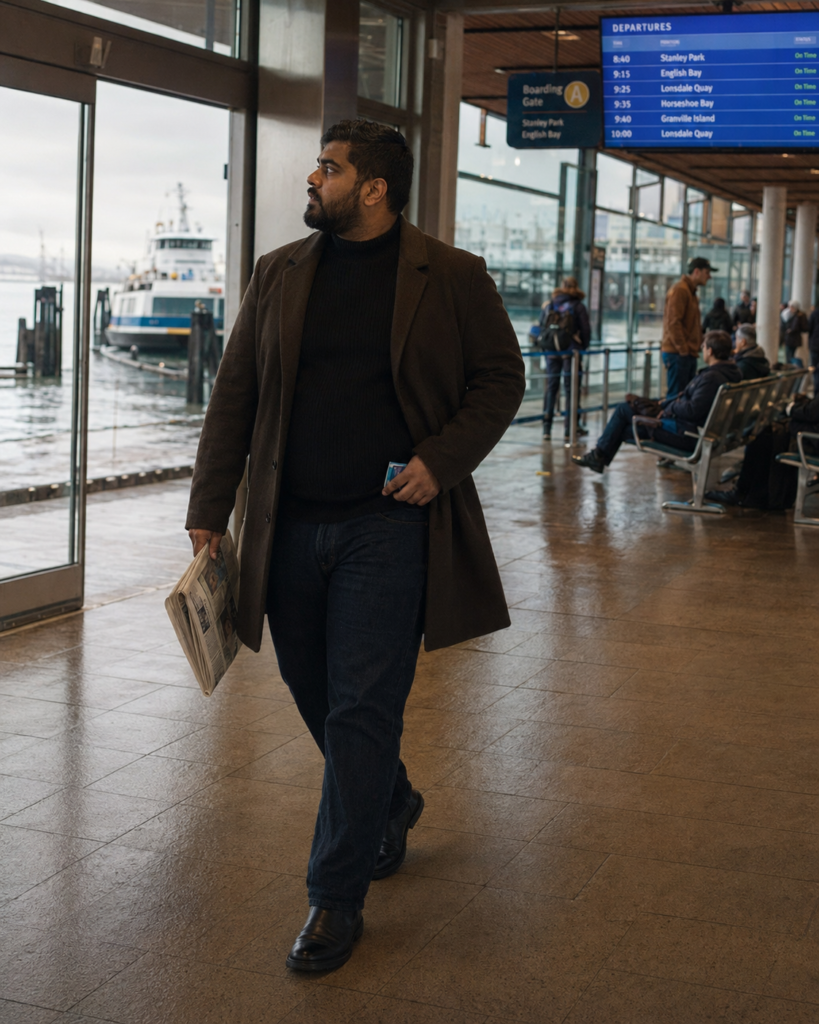
Because the car coat already gives you length, the knit underneath should stay close without gripping your stomach. Keep the mock neck low enough that it does not crowd a thick neck or fuller face.
Let the coat reach mid-thigh so it covers the waistband and avoids cutting across your widest point. Pair it with straight dark jeans to balance broad shoulders and heavy legs. Check the sleeve room while driving or reaching forward. Avoid thick layers beneath a coat that barely closes.
Nothing beats a mid-thigh car coat for giving a bigger frame shape, warmth, and coverage without making the outfit feel stiff or formal.
Navy Parka With Flannel and Relaxed Cargo Trousers
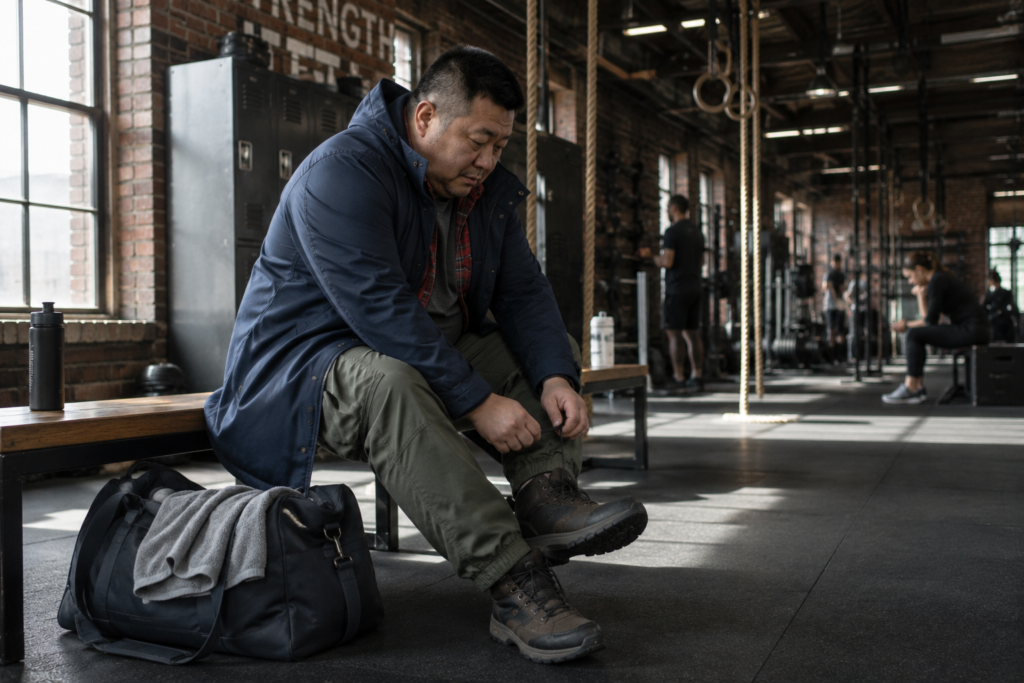
Once the temperature drops hard, a parka needs to cover more than your chest. Thigh length protects the hips and lower stomach while creating a longer outline. An open flannel adds colour, but the dark T-shirt underneath keeps the centre from getting busy.
Relaxed cargo trousers give thick thighs room without forcing you into sweatpants every day. Choose flat pockets instead of large side pockets that stick out. Zip the coat while seated before buying it.
A proper parka should close comfortably over your winter layers, because wearing it open in real cold defeats the reason you bought it.
See more How to Choose the Perfect Plus Size Groom Suit for Your Body Shape
Plum Duffle Coat With Grey Winter Layers
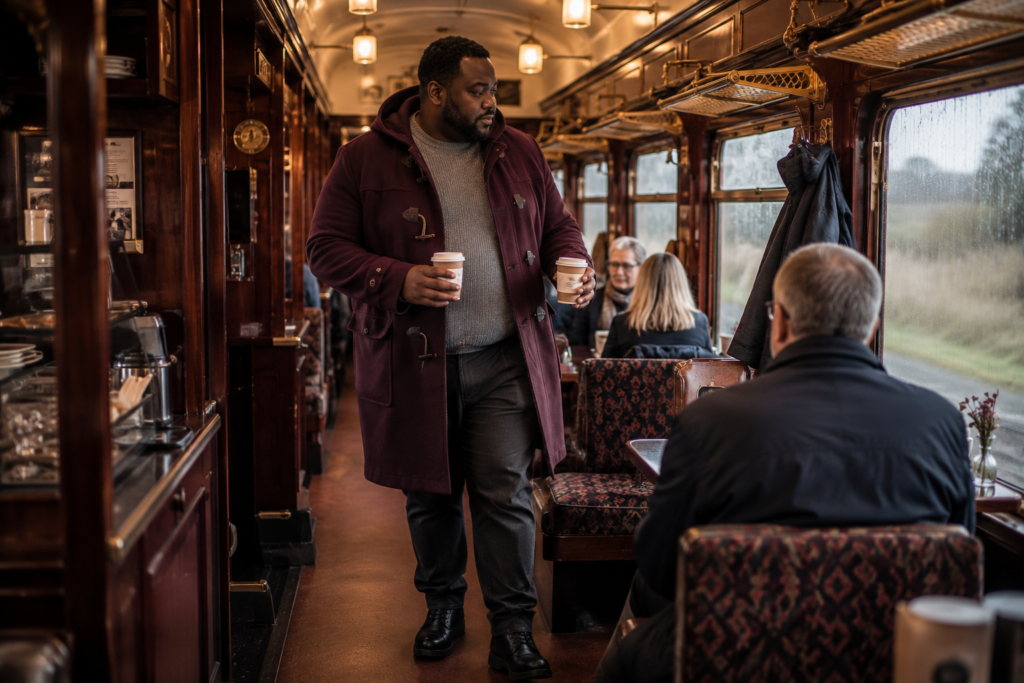
With a duffle coat, the toggles should lie flat instead of stretching across the stomach like tight ropes. Use grey layers underneath to calm the strong plum colour and keep the body line simple. Let the coat reach the knee so it balances a tall, broad frame.
Choose straight trousers that do not narrow sharply below heavy thighs. Sit with the coat closed before buying. Avoid large patch pockets filled with gloves, keys, and a phone, because that extra weight adds width around the hips.
Duffle coats look strong on bigger men when the length is generous, the shoulders stay clean, and the front closes without strain.
Olive Field Jacket Over a Warm Half-Zip Knit
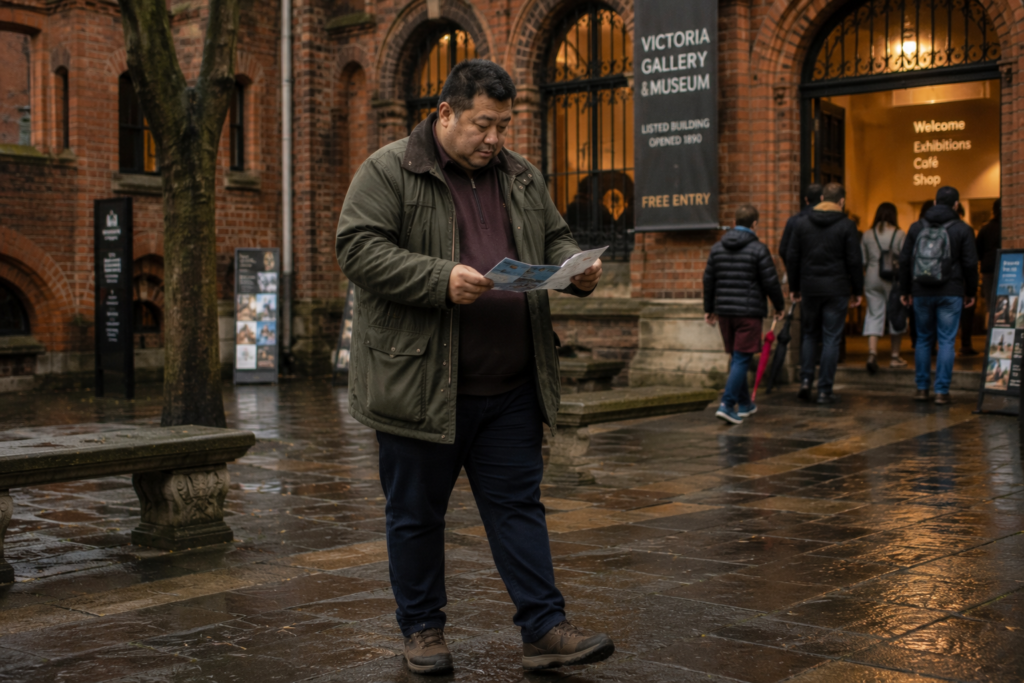
Over a half-zip knit, the field jacket adds warmth and shape without the stiff feel of formal outerwear. Olive works well with navy trousers because both colours stay grounded while the plum knit adds depth near the face.
Keep the zip slightly open if a thick neck feels crowded. Flat front pockets are better than large stuffed pockets around the stomach. Choose trousers with room through the seat and thighs so the outfit stays balanced from top to bottom.
Field jackets suit bigger men because they give the shoulders structure, but the cleanest versions avoid extra straps, swollen pockets, and a tight waist.
Ice Blue Insulated Overshirt With Black Knitwear
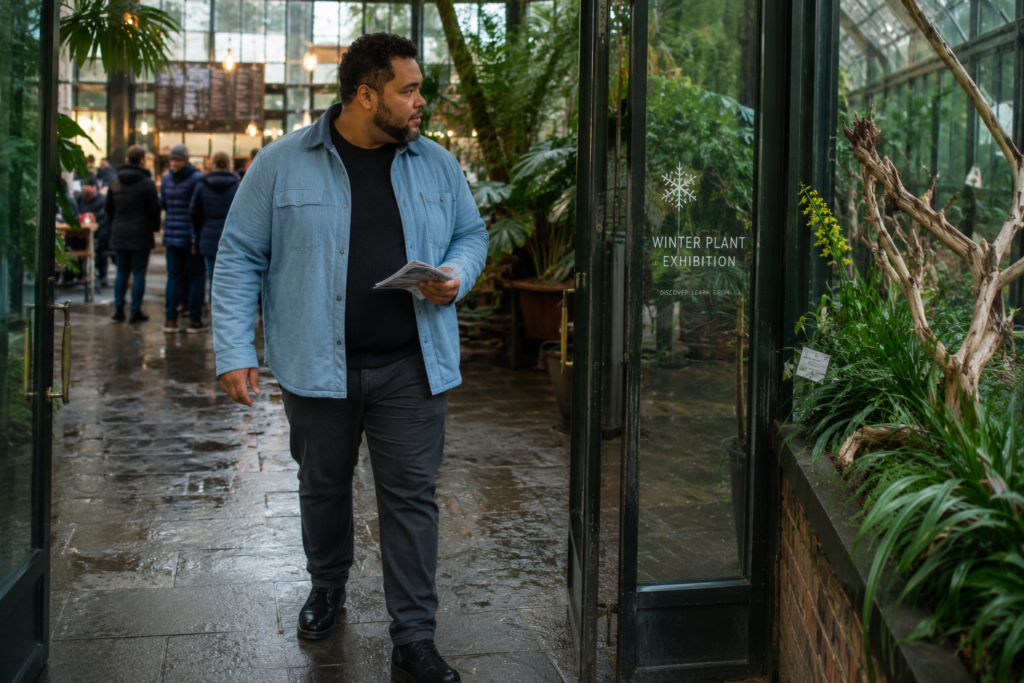
Between a shirt and a jacket, the insulated overshirt gives warmth without the heavy shape of a full winter coat. Fasten only the middle buttons when you need protection but still want space around the stomach.
Layer black knitwear underneath so the pale blue outer piece frames the torso. Keep the hem below the hips to smooth the waistband area. Roll nothing. Skip overshirts with tiny chest pockets, narrow sleeves, or stiff sides that stick away from the body.
An insulated overshirt is the smartest light winter layer for bigger men because it adds shape without trapping the arms or crowding the middle.
Test Every Winter Coat While Sitting, Driving, and Reaching Forward
Because a winter coat can feel fine while standing and fail the moment you sit, test it in three positions before buying. Begin by fastening every button or zipper, then sit on a firm chair with both feet flat.
Read also Plus Size Men Office Outfits That Go From Desk to After-Work in Seconds
Then check whether the front pulls across your stomach, the hem rises above your waistband, or the collar pushes into your neck. Next, reach forward as if holding a steering wheel, since bigger men often need more room across the upper back and arms.
During that movement, the sleeves should stay near your wrists and the shoulder seams should not drag backward. Watch the lower front too.
Ignore advice that says a coat only needs to close while you stand, because winter clothes must work during driving, commuting, eating, and bending. Remember that tight armholes make every layer underneath feel thicker than it is.
Return any coat that forces you to undo it each time you sit, since that means the cut does not match your body. A proper winter coat should move with your stomach, back, and arms without losing its shape.
Stop Fixing Belly Room by Buying Coats That Are Too Big Everywhere Else
Instead of buying two sizes larger, find a coat that fits your shoulders first and gives extra room through the middle. Common advice says to size up until the front closes, but that often leaves the sleeves too long, the shoulders dropped, and the body shaped like a tent.
Check that each shoulder seam ends near the edge of your shoulder rather than halfway down your upper arm. Look for a straight or relaxed cut through the stomach, because that adds space where bigger men need it without widening the whole coat.
Choose wider armholes when you plan to wear sweaters underneath. Keep the sleeve length near the wrist bone so your hands do not disappear inside the cuffs.
Avoid stiff coats that flare away from the belly, since extra space means little when the fabric refuses to hang cleanly. Size the coat while wearing your normal winter layer, not a thin T-shirt.
Accept slight room at the stomach, but reject loose fabric around the upper back and sides. Buy for your actual shape, not for the largest part of your body alone.
Why Your Winter Layers Keep Bunching Above Your Waistband
Once your shirt, sweater, and coat start gathering above the waistband, the whole outfit feels tighter and looks shorter. Bunching usually begins when the base layer is too long, the sweater is too short, or the trouser rise sits too low under the stomach.
Tuck only thin base layers, since thick shirts create a lump around the waist. Match the sweater hem to the top of your hips so it covers the waistband without dropping over the seat.
Let the coat hang below both layers, which keeps the shorter pieces from pushing upward as you move. Smooth each layer before putting on the next one.
Raise both arms after dressing, then bend and sit to see which piece rides up first. Stop wearing low-rise trousers if your stomach pushes the waistband downward, because every top layer will follow it.
Fix the problem with a medium or higher rise that stays closer to your natural waist. Layer from thinnest to thickest, and leave enough room between pieces so the fabric can slide instead of catching.
Choose Warm Trousers That Fit Your Thighs Without Swallowing Your Ankles
Below the coat, trousers control whether your winter outfit looks balanced or heavy from top to bottom. Straight cuts work best for many plus size men because they leave room through the thighs and continue in one clean line to the shoe.
Relaxed cuts help when the seat and upper legs need more space, but the lower leg should still stay controlled. Sharp tapers often fail because they grip thick calves and make the thighs look even wider.
Rise matters too. Inspect the waistband while sitting, and choose a medium or higher rise that stays in place instead of sliding under the stomach.
Hem length should create one small break over the shoe, not several folds stacked at the ankle. Skip extra-wide legs unless your calves need the space, since too much fabric can shorten the body.
Pick dark navy, charcoal, brown, or black for easy winter matching. Judge the fit from the side and back as well as the front, because pulling across the seat is easy to miss in a mirror.
Build Warmth Around Your Core Without Adding Bulk Across Your Chest
Rather than stacking three thick tops, warm the body with one close base layer, one light knit, and a coat that blocks wind. Warmth comes from trapped air and covered skin, not from making every layer heavy.
Put a thin thermal top against the body so it holds heat without widening the chest or arms. Add a fine sweater or half-zip next, leaving enough room across the stomach for the fabric to fall instead of cling.
Wear a lined coat as the outer layer, since that replaces the need for another bulky hoodie. Use a scarf to protect the neck and upper chest without adding thickness across the whole torso.
Reserve quilted vests for dry, mild days when arm movement matters more than full coverage. Leave thick cable knits for outfits with roomy outerwear, because tight coats crush the knit and restrict the shoulders.
Swap bulky layers for longer coverage when possible, such as a mid-thigh coat over lighter pieces. Build heat where your body loses it, while keeping the front clean and the arms free.