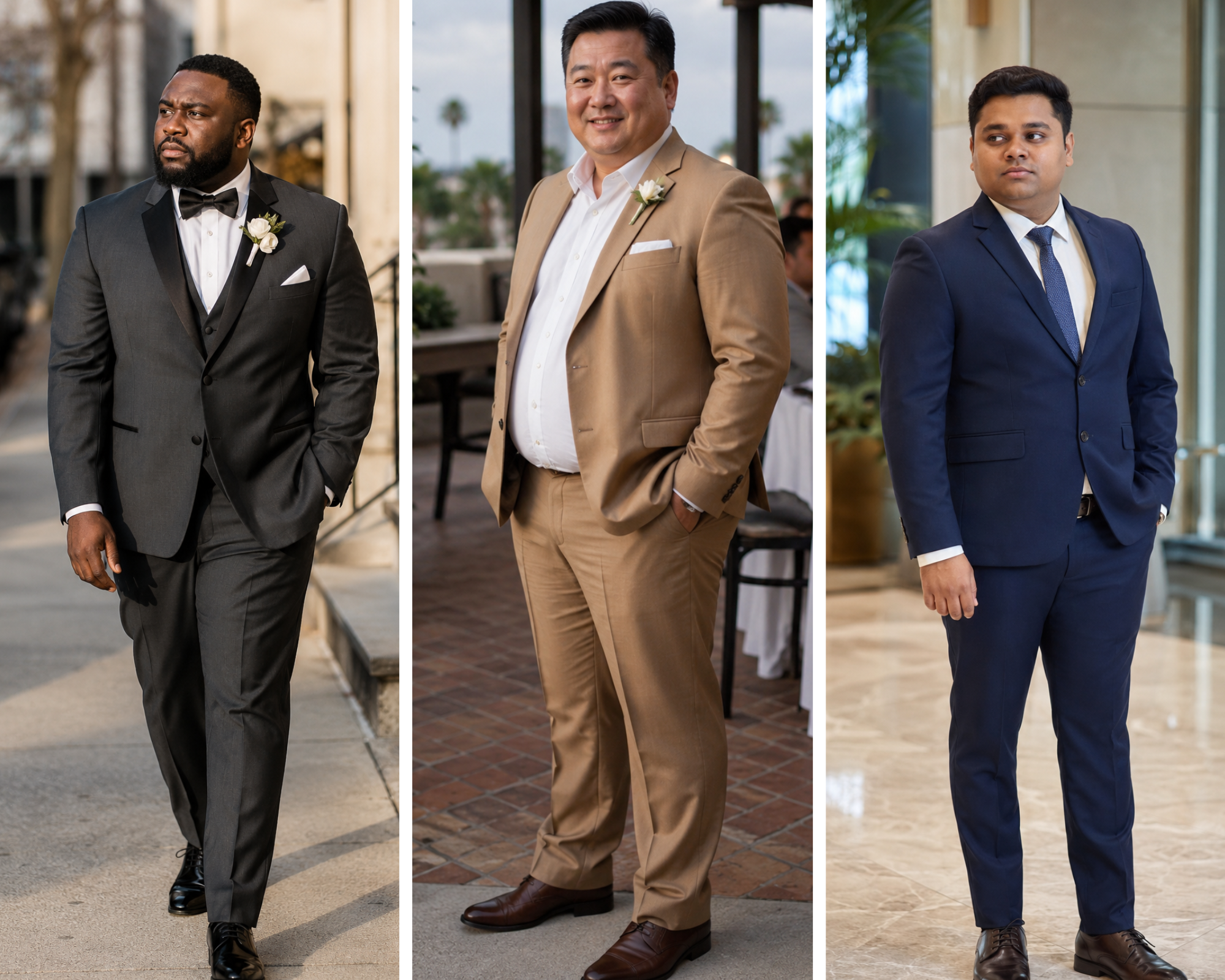
Your suit should make you look shaped, not squeezed. Too many grooms choose the size that closes and hope the rest will work.
Fit comes first. Photos tell the truth.
Start by looking at where your body needs the most room, whether that is your stomach, chest, shoulders, thighs, or height. Then choose a jacket, trousers, shirt, and accessories that work with your shape instead of fighting it.
A bigger suit is not always better, because extra fabric can make you look wider and less polished. Comfort matters too.

When you can sit, walk, hug, and dance without pulling or pinching, you are much closer to the right wedding-day look.
See 25 Plus Size Men Summer Outfits to Stay Cool and Look Good Doing It
Start With Fit, Not Size Label

Fit comes first.
Size labels can help you start, but they cannot tell you how a suit will sit on your shoulders, stomach, arms, or thighs. The right suit should give you shape without making you feel trapped.
1. The jacket should skim your body, not squeeze it
Your jacket should follow your body without pulling across the buttons.
Smooth fabric looks better than tight fabric, especially in wedding photos where every line shows.
2. A suit that is too big can make you look heavier
Extra fabric does not hide size.
Loose shoulders, wide sleeves, and a boxy jacket can make your frame look larger than it really is.
3. Button pull, shoulder dents, and sleeve drag are warning signs
Button pull means the jacket is too tight around the middle.
Shoulder dents show the jacket is not sitting cleanly, while long sleeves can make the whole suit look borrowed.
4. Comfort matters because you will sit, walk, dance, and take photos
Wedding suits must move with you.
Before you choose one, sit down, raise your arms, turn your body, and walk around the fitting room. A suit that looks good only when you stand still may become uncomfortable before the reception starts.
Save for later Summer Wedding Guest Outfits for Plus Size Men That Beat the Heat
Identify Where You Carry Most of Your Weight Before Choosing the Suit Shape

Your body shape should guide the suit, not the mannequin in the shop.
Many plus size grooms choose based only on chest size, but the best suit depends on where you need room and where you need shape.
1. Bigger stomach: create a cleaner vertical line
A jacket that closes smoothly over the stomach will look sharper than one that pulls at the button.
Choose a cut that gives room through the middle without hanging like a square.
2. Broad chest and shoulders: avoid jackets that pull across the front
Broad builds need space across the chest.
If the lapels lift, the buttons pull, or the jacket opens while standing, try a different cut or size.
3. Larger hips or thighs: balance the lower body with the right trouser cut
Trousers should not cling to the thighs.
Straight or gently tapered legs can make the lower body look cleaner while still giving enough room to sit and move.
4. Shorter plus size build: avoid heavy breaks and long jackets
Shorter grooms should watch jacket length and trouser pooling.
Too much fabric around the shoes or a jacket that hangs too low can make your legs look shorter.
5. Tall plus size build: use structure without making the suit look boxy
Tall grooms often need length, but not bulk.
A structured jacket can give shape to the shoulders and chest, while clean trouser lines stop the outfit from looking heavy.
Read also 15 Smart Casual Workwear for Plus Size Men in Non-Corporate Jobs: The Rules Are Different Here
Choose the Best Jacket Cut for a Plus Size Groom
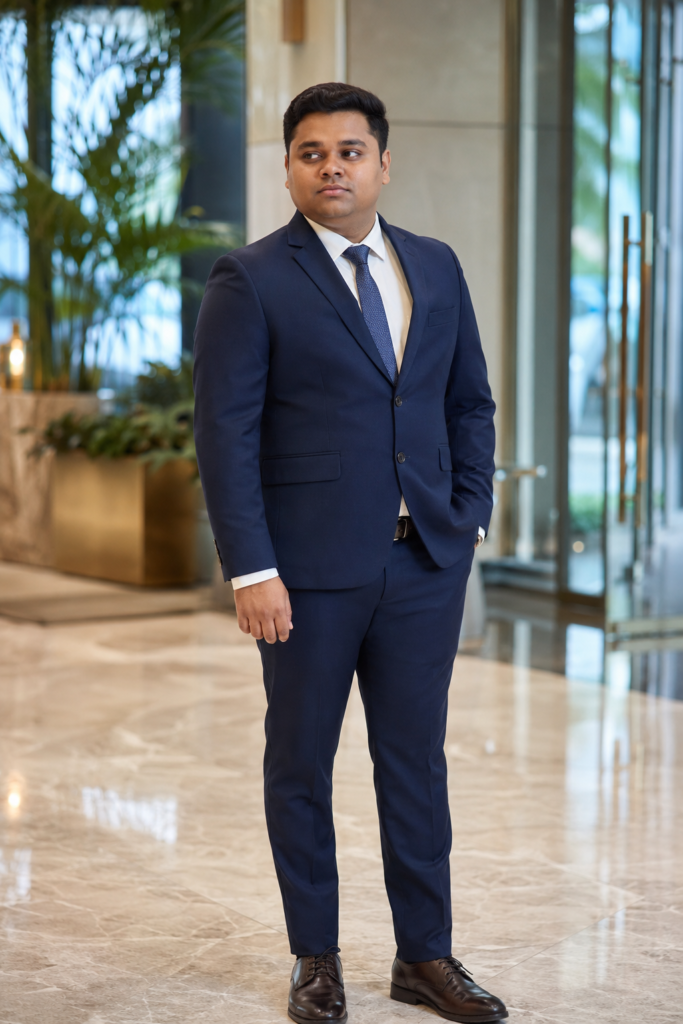
The jacket decides the shape people see first.
A good jacket can make you look taller, cleaner, and more balanced, while the wrong one can add bulk even when the size is technically correct.
1. Single-breasted jackets are usually easier to balance
Single-breasted jackets have one row of buttons.
This style is often easier for plus size grooms because it creates a cleaner front and does not add extra fabric across the stomach.
2. Two-button jackets often create a cleaner front line
Two buttons usually give a simple, balanced look.
The top button should close without pulling, and the lower button is normally left open so the jacket can sit better.
3. Structured shoulders help the suit look polished
Shoulders should look clean, not padded like armor.
A little structure can sharpen your upper body and make the jacket look made for you.
4. Jacket length should cover the seat without swallowing the legs
Length matters.
The jacket should cover your seat, but it should not hang so low that it makes your legs look shorter. This is especially useful if you are both short and plus size.
5. Avoid tight vents that flare open at the back
Vents are the openings at the back of the jacket.
If they flare open while you stand, the jacket is too tight around the hips or seat. Try a better cut instead of forcing it closed.
Check out Plus Size Men First Date Outfits: Looks That Make the Best First Impression
Pick Trousers That Sit Correctly on Your Waist and Thighs

Bad trousers can ruin a good jacket.
Many grooms focus on the coat, then ignore the waist, thighs, and shoe line, even though trousers affect comfort all day.
1. Mid-rise trousers usually sit better than low-rise trousers
Mid-rise trousers sit closer to the natural waist.
This can feel more secure and create a smoother line under the jacket.
2. Straight or gently tapered legs look cleaner than skinny cuts
Skinny trousers can pull at the thighs and calves.
A straight or gently tapered cut gives shape without making the lower body look squeezed.
3. Pleats can help some grooms, but only when tailored well
Pleats are folds near the front of the trousers.
They can give extra room around the stomach and thighs, but poor pleats can puff out and add bulk.
4. The trouser break should be neat, not piled over the shoes
The break is where the trouser touches the shoe.
A small, clean break usually looks sharper than fabric bunching around the ankles.
5. Waist comfort matters more than forcing a smaller size
Tight waistbands show.
Choose trousers that let you sit, breathe, and move without digging into your stomach. A tailor can clean up extra fabric, but a painful waist will distract you the whole day.
Use Color, Fabric, and Pattern to Look Sharp Without Hiding Your Body
Color should shape the outfit, not make you feel trapped in black.
Many plus size grooms choose the darkest suit in the shop because they think it will hide everything, but fit and fabric usually matter more than color alone.
1. Dark colors can look sleek, but they are not the only option
Navy, charcoal, deep green, chocolate brown, and burgundy can look polished without feeling boring.
Black works well for formal weddings, but it is not the only “safe” choice.
2. Matte fabrics photograph better than shiny tight fabrics
Matte fabric means the surface does not reflect much light.
Shiny fabric can draw attention to pulling, stretching, or tight areas, especially around the stomach, chest, and thighs.
3. Fine patterns work better than large loud patterns
Small checks, soft texture, or thin stripes can add style without making the suit look busy.
Large patterns can make the body look wider if the fit is already tight.
4. Heavy fabric can add bulk in warm weather
Thick fabric may feel strong, but it can also make you sweat and look bigger than you are.
Choose fabric that matches the season, venue, and how long you will wear the suit.
5. Lighter suits can work when the fit is clean
Cream, tan, light grey, and soft blue can look sharp when the suit fits well.
Clean tailoring gives lighter colors structure, so you do not have to hide behind dark shades.
Continue reading Plus Size Men Formal Outfit Ideas for Black Tie Events That Wow the Room
Match the Shirt, Waistcoat, and Accessories to Your Body Shape
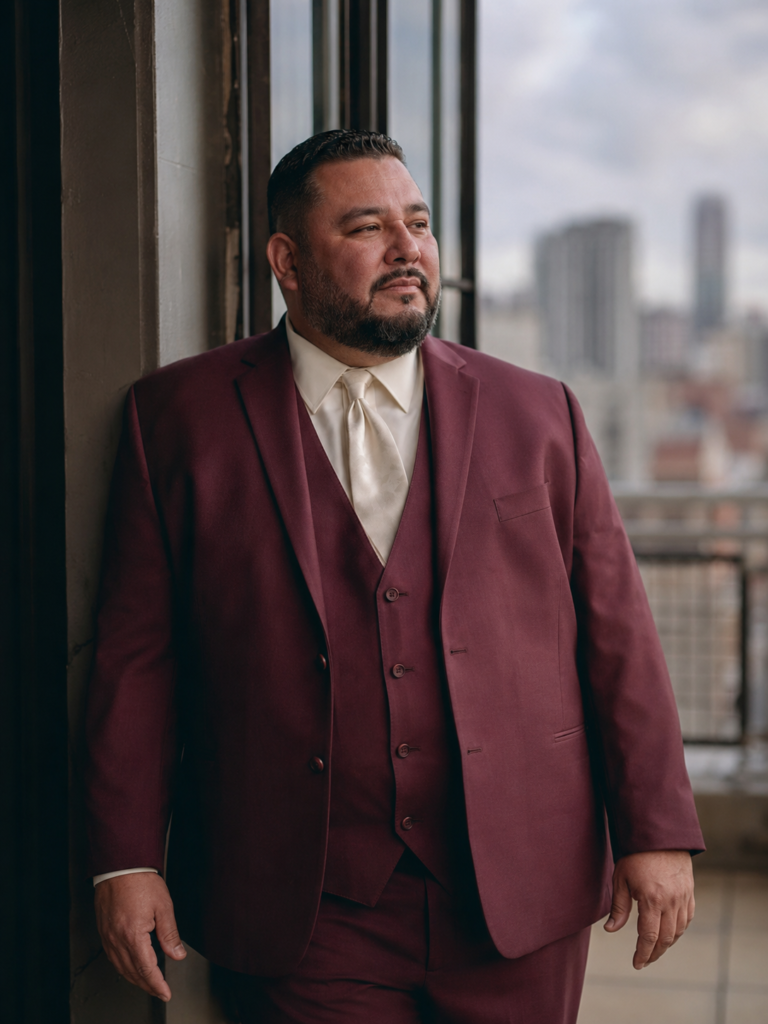
The suit is only one part of the look.
A poor shirt, tight waistcoat, short tie, or bulky belt can break the clean line you worked hard to create.
1. A properly fitted shirt stops pulling at the buttons
Your shirt should close smoothly across the chest and stomach.
Button gaps will show under the jacket, especially when you sit, hug, or move during photos.
2. Waistcoats should smooth the front, not squeeze the stomach
A waistcoat is the vest worn under the jacket.
It should sit flat and clean, but it should not feel like it is holding your stomach in place.
3. Longer ties can suit taller or broader grooms better
A tie that stops too high can make your chest and stomach look larger.
Choose a length that reaches the waistband area, and pick a width that matches your frame.
4. Pocket squares should add style without adding chest bulk
Pocket squares are small folded cloths placed in the jacket pocket.
Use a clean fold instead of a large puff if your chest is already broad.
5. Belts can cut the body in half, while suspenders may give a cleaner line
A belt can create a strong line across the middle.
Suspenders, which hold trousers up from the shoulders, can help the trousers sit better without squeezing the waist.
See now Plus Size Men Winter Wedding Outfits That Are Warm and Absolutely Elegant
Test the Suit in Wedding-Day Positions
A suit that only looks good standing still is not ready for your wedding.
You will sit, hug, dance, bend, walk, turn, laugh, and pose, so the fitting room test should copy real wedding movement.
1. Sit down and check the stomach, thighs, and jacket button
Sitting shows what standing hides.
If the waistband digs in, the thighs pull, or the jacket button strains hard, the suit needs a better fit or adjustment.
2. Raise your arms to see if the shoulders pull
Lift your arms like you are greeting someone or dancing.
The jacket should move with you without dragging the whole body of the suit upward.
3. Hug someone to test the back and sleeves
A wedding day comes with hugs.
If the back feels tight or the sleeves pull too far up, the jacket may be too narrow across the shoulders or arms.
4. Walk and turn to check trouser comfort
Take a few steps and turn slowly.
Trousers should not grab your thighs, slide down your waist, or bunch heavily around your shoes.
5. Take phone photos from the front, side, and back
Mirrors can lie.
Phone photos show pulling, extra fabric, sleeve length, jacket balance, and trouser shape more clearly before you pay.
Know What a Tailor Should Fix Before the Wedding Day
A good tailor can make a decent suit look much sharper.
Still, tailoring is not magic, so start with a suit that fits your shoulders, chest, stomach, and thighs as closely as possible.
1. Shorten sleeves so the shirt cuff shows slightly
Long sleeves make the suit look too big.
Ask the tailor to shorten them so a small part of your shirt cuff can show under the jacket sleeve.
2. Adjust trouser length for a cleaner shoe line
Trouser fabric should not pile over your shoes.
A clean break, which is where the trouser meets the shoe, makes the whole outfit look neater.
3. Shape the jacket sides without making it tight
The jacket sides can be shaped slightly to reduce boxiness.
Avoid making the waist too tight, because button pull will show in photos.
4. Fix waist gaps, pulling, and loose fabric
Trousers should sit securely without squeezing.
A tailor can adjust the waist, clean up extra fabric, or improve small fit issues before the wedding day.
5. Schedule fittings early enough for corrections
Do not leave tailoring until the final week.
Book early, try the full outfit after changes, and allow time for one more correction if something still feels off.
Build a Plus Size Groom Suit Checklist Before You Buy or Rent
A checklist keeps you from choosing a suit only because the color looks good.
Bring this list to the shop, fitting room, or rental appointment so you can judge the full outfit with less stress.
1. Check shoulder fit first
Shoulders are hard to fix.
The seam should sit close to the edge of your shoulder without drooping or digging in.
2. Make sure the jacket closes without pulling
Button the jacket and look at the front.
Smooth fabric means better fit, while strong pulling means the size or cut is wrong.
3. Confirm the trousers feel good when sitting
Sit before you agree.
The waist, thighs, and seat should feel comfortable enough for a full wedding day.
4. Choose fabric based on season and comfort
Hot weather needs lighter fabric.
Cooler weather can handle heavier fabric if it still moves well.
5. Take photos before paying
Use front, side, and back photos.
Small fit problems are easier to see in pictures than in a mirror.
6. Ask what alterations are included
Rental and purchase rules are not always the same.
Ask what can be changed, how long it takes, and whether extra tailoring costs more.