Every groom deserves to feel like the best-dressed person in the room on his wedding day. Full-figured men have more stunning outfit options than ever before, and the old excuse that “nothing fits right” simply doesn’t hold anymore. Tailoring has changed. Designers have caught up. The choices are genuinely exciting.
Looking great at your wedding isn’t about hiding your body. It’s about dressing it with intention. The right silhouette, fabric, and fit can make a big man look powerful, polished, and completely at ease. Not like he’s fighting his clothes all day.
Whether you’re drawn to a classic black tuxedo, a relaxed linen suit, or something with real personality, there’s something here for every style and every season. These 20 outfits prove that plus size grooms aren’t settling. They’re stunning.
1. Navy Double-Breasted Suit With Peak Lapels
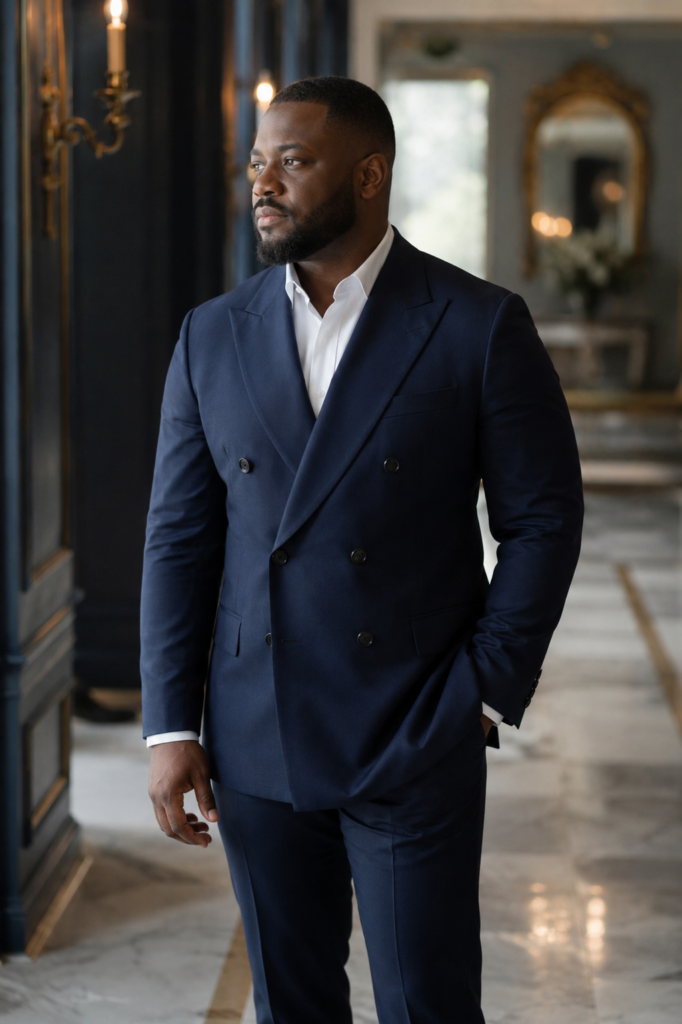
Double-breasted suits are one of the strongest choices a plus size groom can make. The vertical column of buttons draws the eye straight down the center of the body, creating a long visual line that slims the torso. Peak lapels add width to the shoulders, which balances a heavier midsection.
Navy is deep and rich without being as expected as black. A well-fitted double-breasted jacket should button without pulling and sit flat across the chest. When the fit is right, the structured silhouette does a lot of the visual work for you.
One tip: Make sure the jacket buttons at the natural waist, not the hips. If it buttons too low, it shortens the torso and works against you.
Recommended read Big Men Dress to Impress: 15 Looks for Job Interviews and Big Meetings
2. Ivory Linen Suit With a Mandarin Collar Shirt
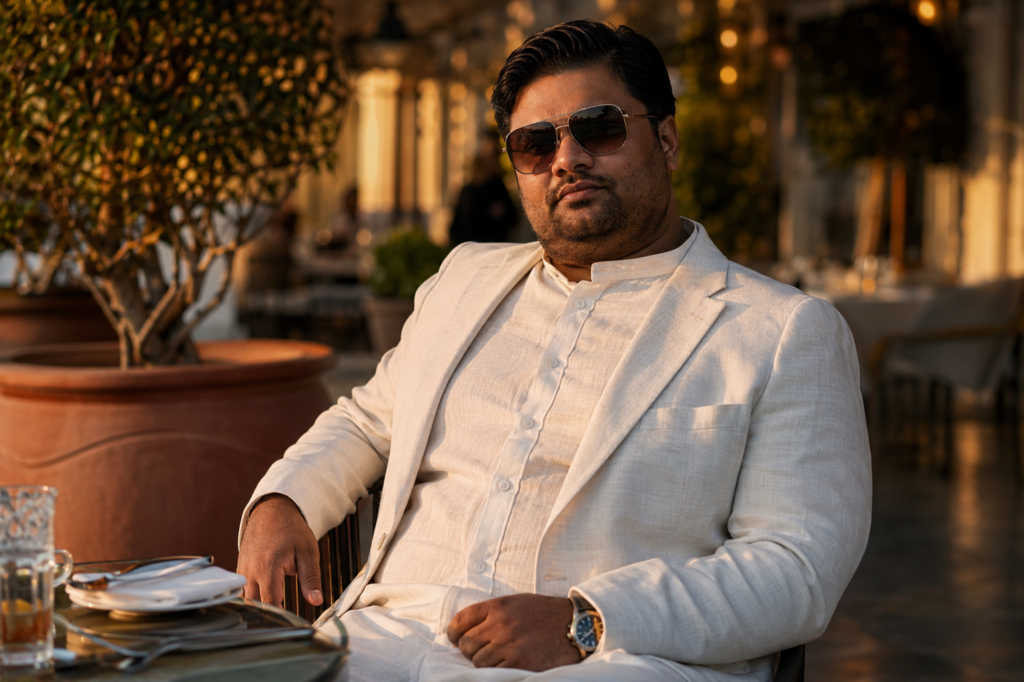
Linen gets a bad reputation for wrinkling, but for a warm-weather or outdoor wedding, it is one of the most comfortable choices a bigger man can wear all day. The mandarin collar removes the necktie from the equation entirely, which means no collar gap and no tie knot sitting awkwardly on a broader chest.
Ivory reads as formal without being harsh white under sunlight. The key is choosing a linen suit that is cut with a bit of structure, not completely unlined, so it holds its shape through a full day of movement.
One tip: Go half-lined on the jacket. A fully unlined linen jacket loses its shape fast on a heavier frame. Half-lining adds just enough structure without the heat.
3. Charcoal Three-Piece Suit With a Burgundy Tie
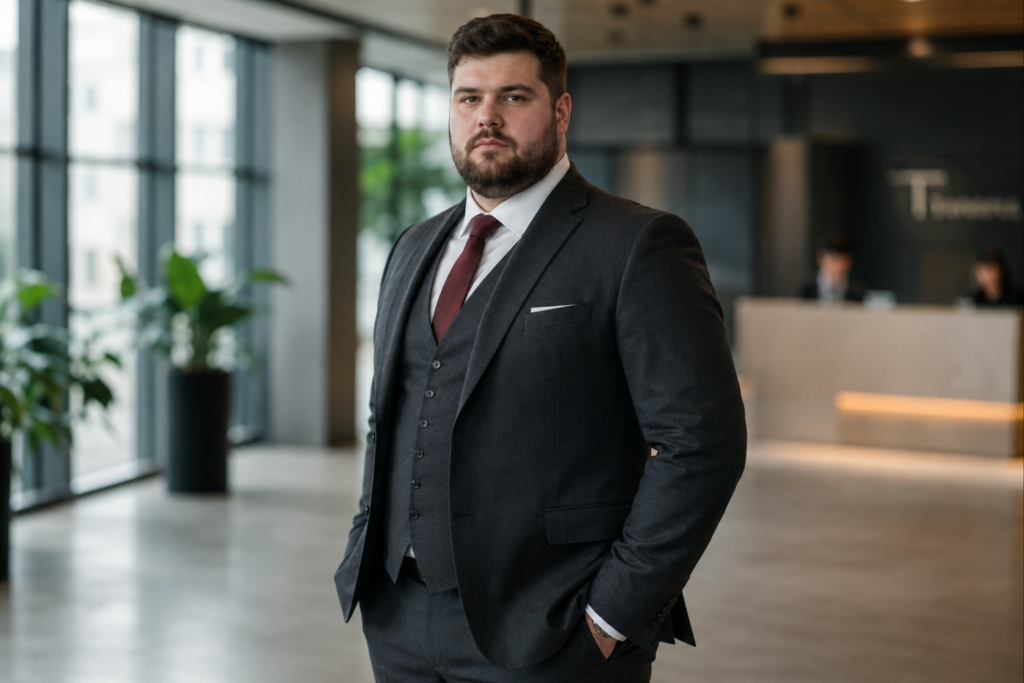
The waistcoat is the underused tool in a plus size groom’s wardrobe. Worn over a dress shirt and under a jacket, it compresses the midsection visually and keeps the shirt tucked neatly all day long. No shirt coming untucked during the reception. No fabric bunching at the waist.
Charcoal is more interesting than black and photographs exceptionally well in both indoor and outdoor light. The burgundy tie pulls color into the look without competing with the suit. Three-piece combinations read as deliberate and well-planned, which always reads well on camera.
One tip: Size the waistcoat separately from the suit jacket. Most men need a different size for each. A waistcoat that fits correctly sits flat with no pulling between the buttons.
4. Black Tuxedo With a Satin Shawl Lapel and Bow Tie
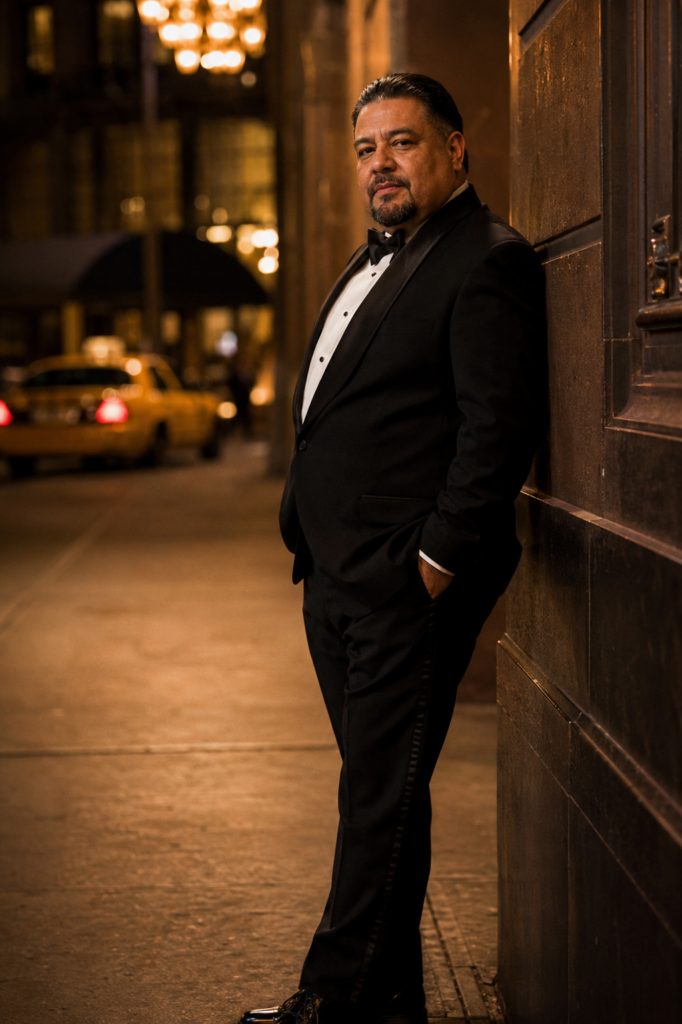
A shawl lapel tuxedo is cleaner than a notch lapel on a heavier chest. The smooth, curved edge of a shawl lapel does not interrupt the eye the way pointed notch lapels can. The result is a longer, calmer vertical line from shoulder to waist. The satin stripe on the trouser leg continues that vertical line all the way to the shoe.
Black-on-black tuxedo dressing works especially well for plus size men because it removes all color contrast from the body, letting the silhouette speak for itself. The bow tie should always be self-tied and slightly imperfect. Pre-tied versions read as stiff.
One tip: Ask your tailor to take in the seat of the trousers slightly. Tuxedo pants often run wide in the seat, which adds visual bulk where you do not want it.
Bookmark for later 25 Casual Plus Size Men Outfits That Actually Look Stylish
5. Dusty Rose Suit With a White Pocket Square
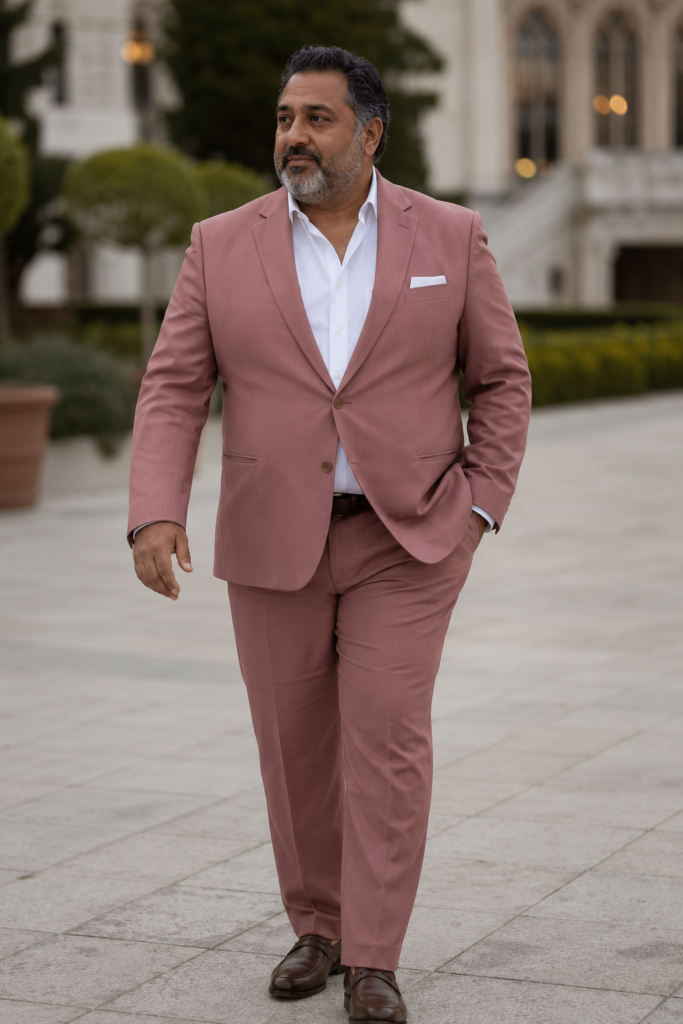
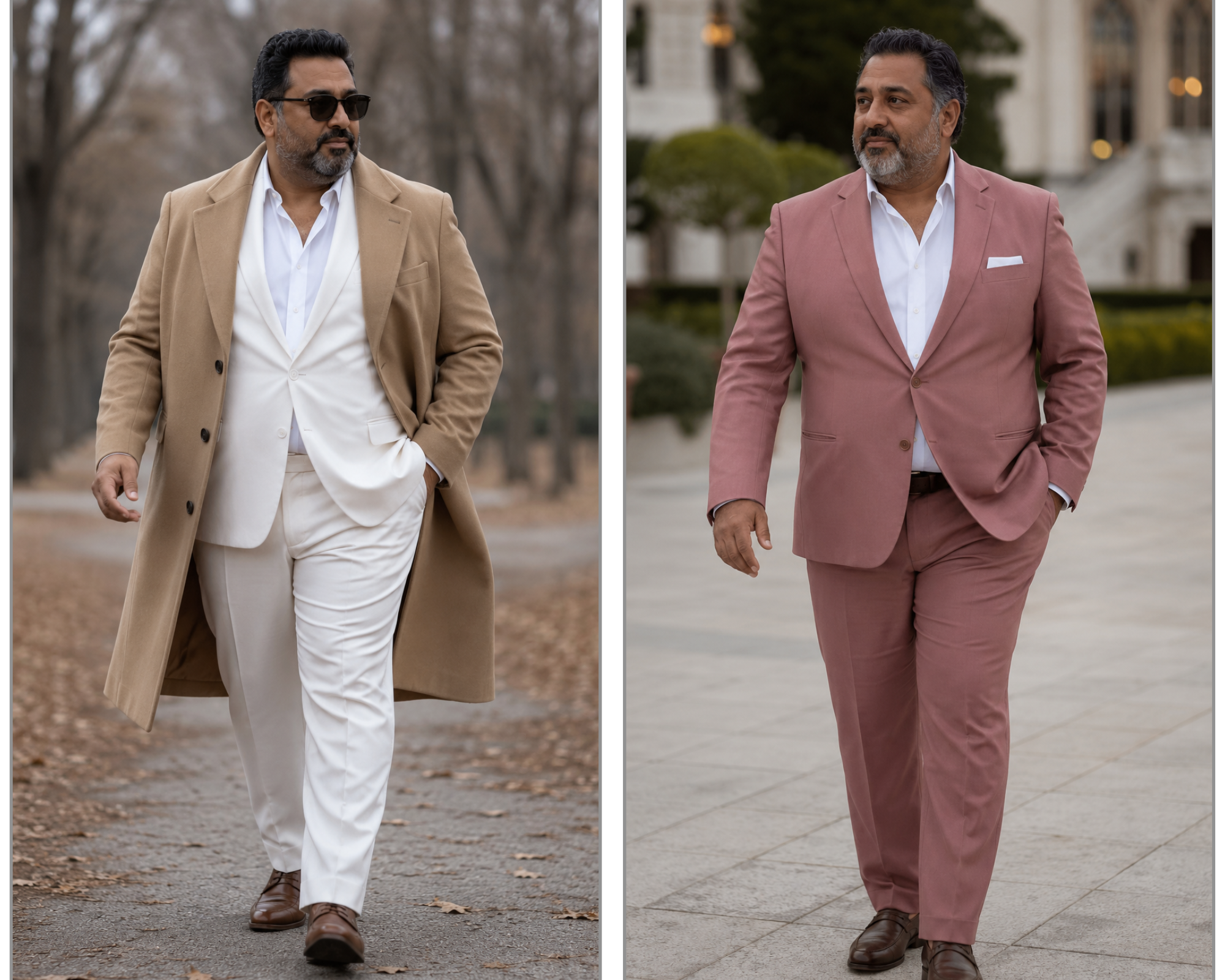
Dusty rose suits have moved well past trend territory and into genuinely classic wedding wear. The muted tone keeps it from reading as costume. On a larger man, softer colors like dusty rose photograph beautifully without flattening or washing out, especially in outdoor or natural light. The key is fit.
A suit in a soft color on a heavy frame needs to be tailored precisely because there is no dark color doing any visual work for you. The jacket should have a clean chest, no pulling across the back, and trousers that break cleanly at the shoe. A flat white pocket square keeps the look polished without competing.
One tip: Skip the tie with dusty rose. An open collar reads as intentional and modern. A tie in a clashing color pulls the look apart fast.
6. White Dinner Jacket With Black Tuxedo Trousers
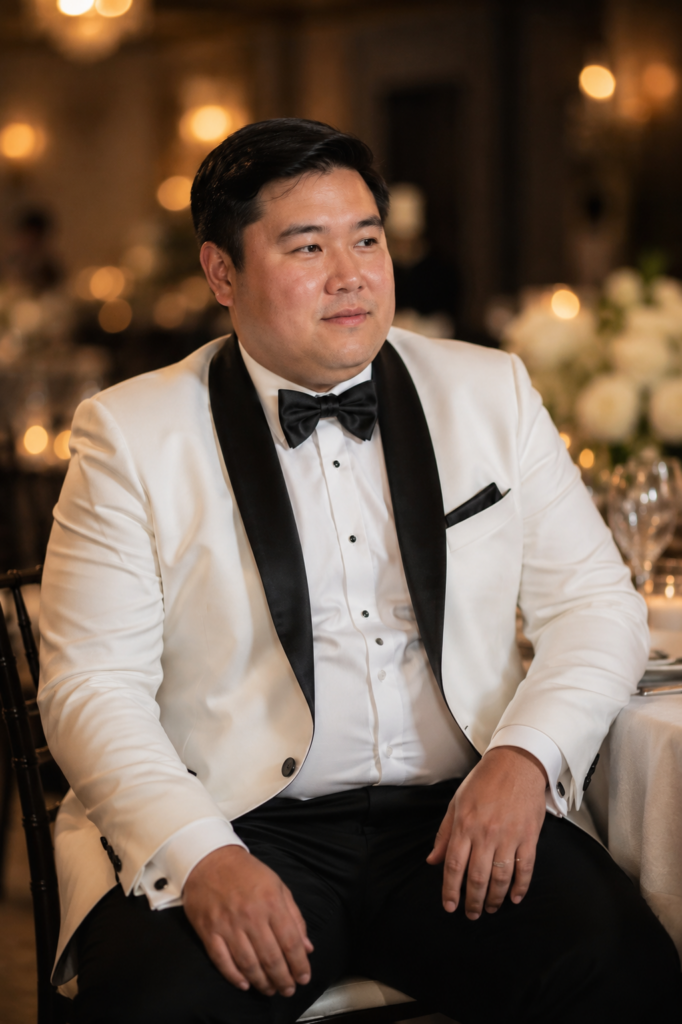
Color blocking the body into two distinct zones, a white jacket on top and black trousers below, creates a strong horizontal break at the waist. For a shorter, heavier man this can feel counterintuitive, but when the trousers are properly fitted and hit the right rise, the combination is striking rather than overwhelming.
The white jacket draws attention upward to the face and shoulders. The black trousers ground the look and visually lengthen the legs. This combination is bold and works best for evening weddings or venues with warm interior lighting where the contrast pops.
One tip: The trouser rise matters here more than with any other outfit. High-rise black trousers under a white jacket create a cleaner break point and prevent the jacket from visually swallowing the lower half.
7. Olive Green Suit With a Cream Dress Shirt
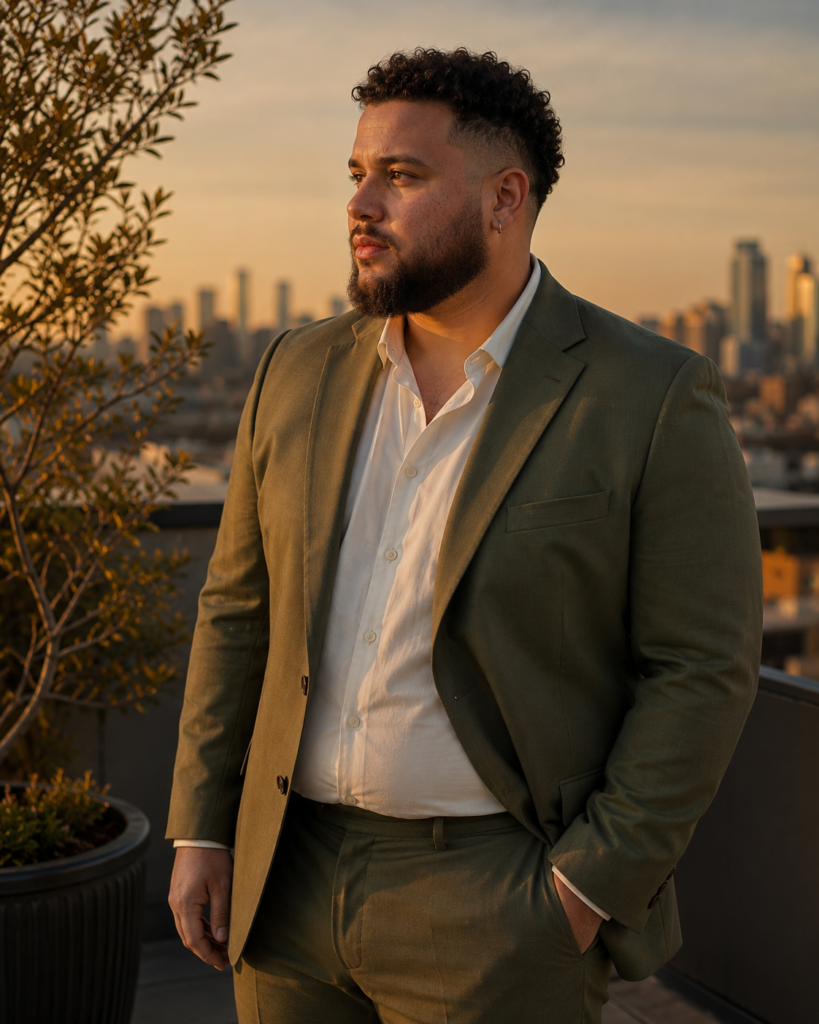
Olive green suits have become a strong alternative to the standard grey or navy, especially for outdoor and garden weddings. The earth tone photographs richly in natural light and pairs naturally with wood, greenery, and stone settings. On a heavier frame, olive works well because it carries visual weight without being heavy or dark.
Paired with a cream shirt, the combination stays warm and cohesive. The jacket should be single-breasted with two buttons and a slightly suppressed waist, which gives shape without being constricting. Skip the tie for a relaxed outdoor look. Keep the lapel medium width, not skinny.
One tip: Have the jacket sleeves shortened so exactly a half inch of shirt cuff shows. On a broader frame, sleeve length is one of the fastest visual signals of a tailored versus off-the-rack fit.
8. Grey Tweed Suit With a Rust Knit Tie
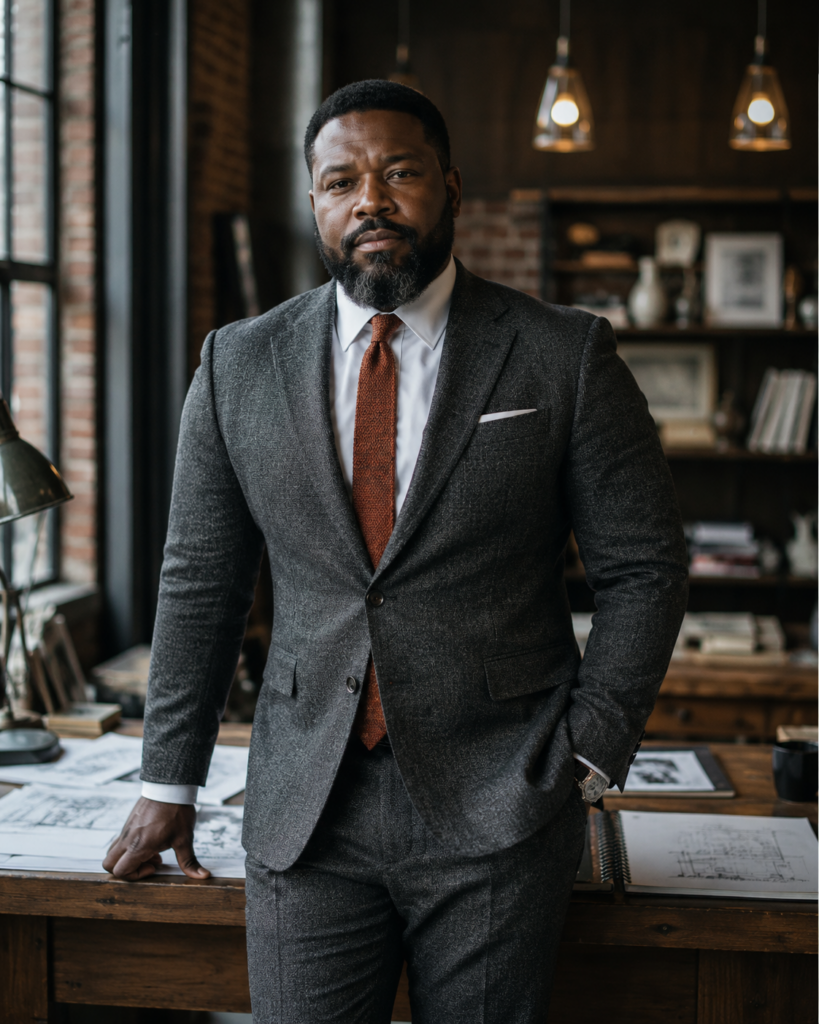
Tweed suits carry texture and visual weight on their own. For a large-framed man, that texture actually works in your favor because it adds richness and depth without requiring layers or accessories to fill the look. Grey tweed in particular reads as distinctly groom without being formal to the point of stiffness.
The rust knit tie introduces warmth and a relaxed texture that softens the whole outfit. Knit ties sit flatter against a broad chest than woven ties, which means less bunching and a cleaner front. The slim width keeps proportion balanced on a larger frame.
One tip: Pair this with brown leather oxfords, not black. Brown grounds the rust and grey together in a way that black shoes would interrupt.
9. Burgundy Velvet Blazer With Black Slim Trousers
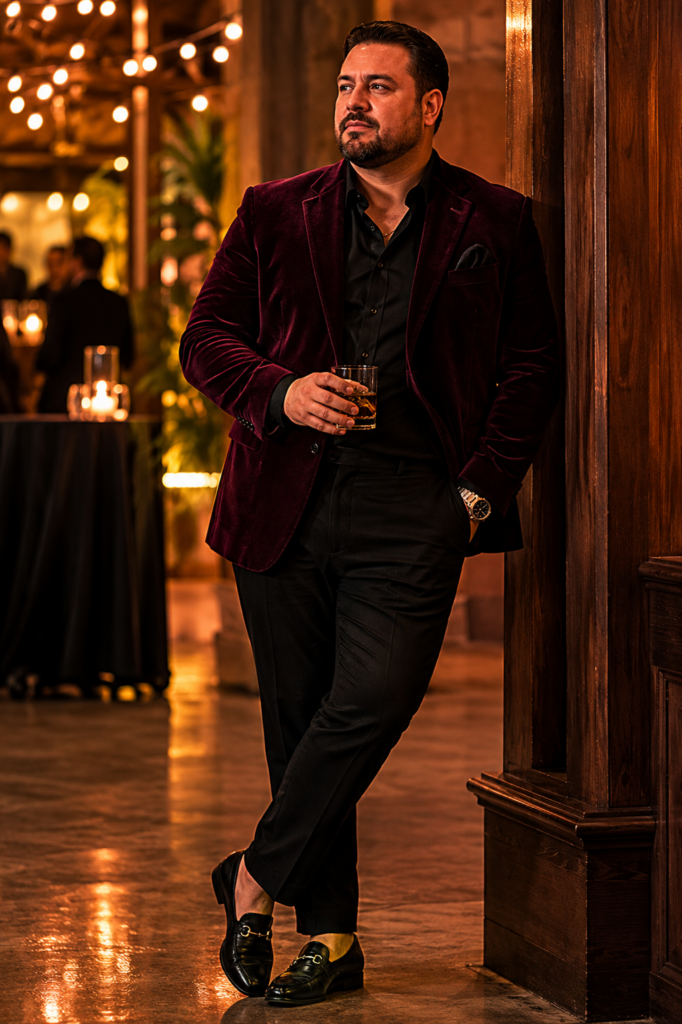
Velvet blazers are the evening wedding cheat code for plus size men who want to look different without going costumey. The fabric catches light in a way that no other material does, and burgundy velvet photographs with incredible depth.
Pairing it with an all-black base, black shirt, black trousers, black shoes, keeps the body in one long dark line while the blazer adds all the visual interest up top. This works especially well for men who carry weight in the midsection because the eye is drawn to the blazer’s color and texture rather than scanning the body’s outline.
One tip: Size the velvet blazer so it falls just below the hips. A blazer that ends at the hips covers the widest part of the body and creates a cleaner line than one that cuts across the midsection.
10. Camel Overcoat Over a White Suit
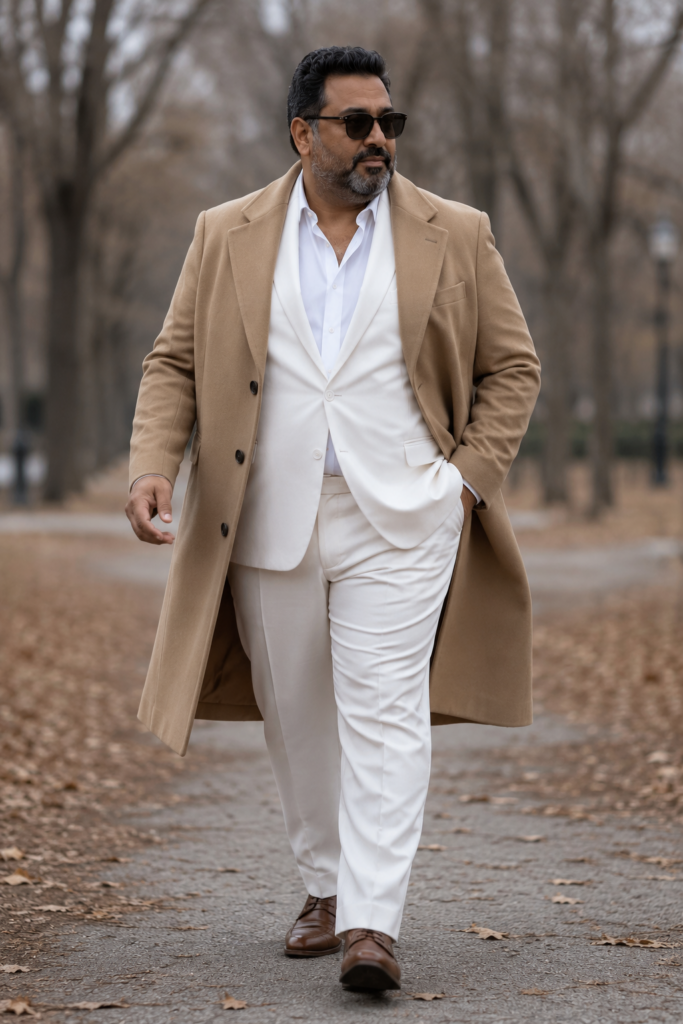
A long camel overcoat over a white suit is a combination that reads as genuinely sophisticated, not simply formal. The overcoat adds vertical length because the eye follows the coat’s edge straight to the ground. On a broad-shouldered, heavier man, a long coat creates a clean outer silhouette that contains the whole look.
Camel and white together are warm without being soft. The white suit underneath gives the groom a complete outfit that works just as well when the coat comes off. This combination suits cooler month weddings where an overcoat is practical rather than purely decorative.
One tip: The overcoat must be long enough to fall below the knee. A coat that hits mid-thigh on a heavier frame cuts the leg line and shortens the overall silhouette. Below-knee length is what makes this work.
11. Light Blue Suit With a White Floral Boutonniere
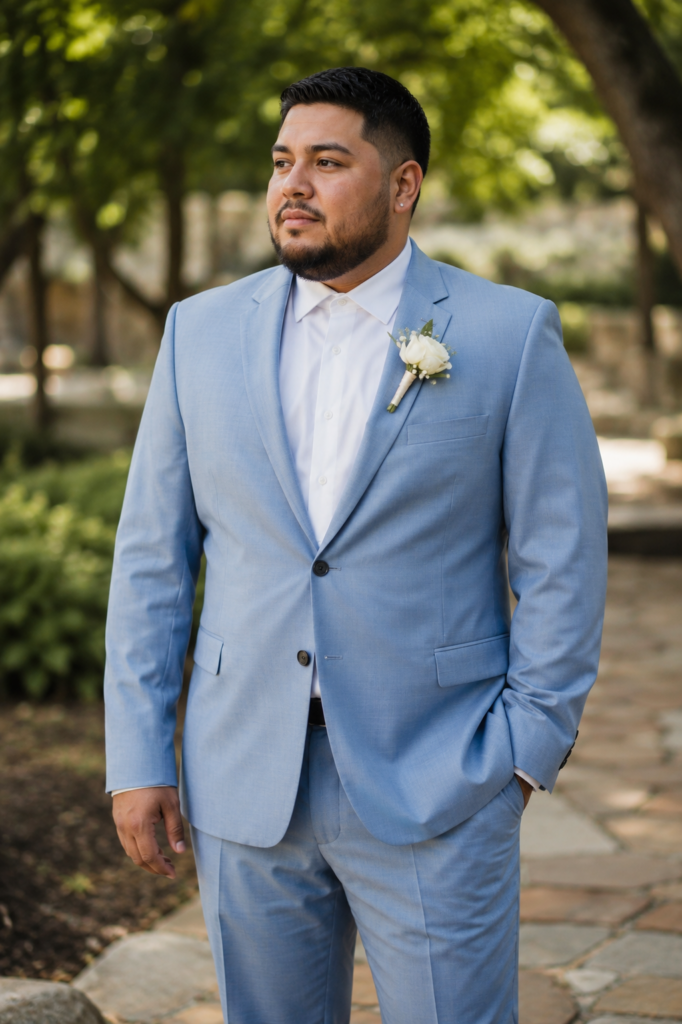
Light blue suits read as fresh and relaxed without losing formality. For a stocky groom, the color does something important: it keeps the whole look light and open, which prevents the visual heaviness that darker suits can sometimes create on a broader frame.
The suit needs to be single-breasted with a slightly structured chest so it holds its shape without pulling. Medium width lapels keep proportions balanced. A single small boutonniere draws the eye to the chest without adding bulk. The look works best for daytime and outdoor weddings where natural light can bring out the color.
One tip: Avoid a patterned shirt with this suit. A plain white shirt keeps all the visual attention on the blue, which is what makes the outfit work.
12. Charcoal Grey Nehru Jacket With Matching Trousers
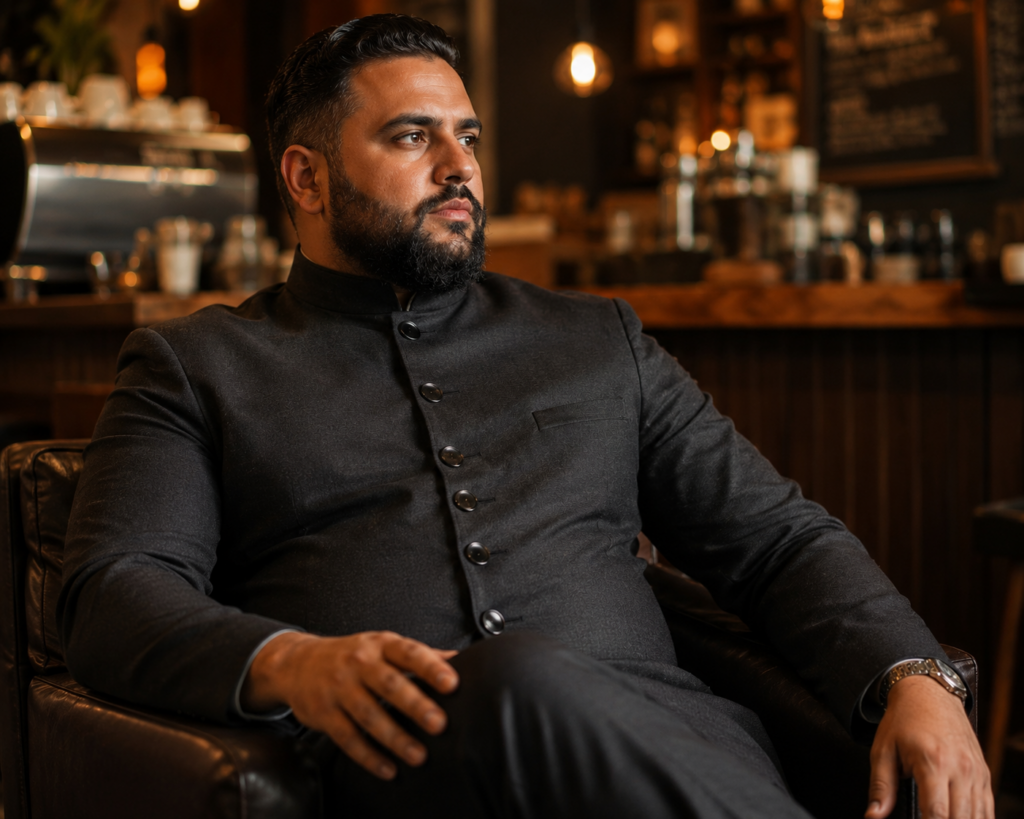
Nehru jackets remove the collar and tie problem entirely. For plus size grooms, the neckline is one of the trickiest things to get right. A standard dress shirt collar on a broader neck can gap, bunch, or feel constricting by the end of the day. The mandarin collar of a Nehru jacket sits flat and neat without any of that tension.
Matching the jacket and trouser in the same charcoal grey creates a single long vertical line from shoulder to shoe. The result is a clean, unbroken silhouette that reads as deliberately modern rather than traditionally formal.
One tip: Have the Nehru jacket taken in at the sides by a tailor. Off the rack versions often run boxy, and a boxy fit on a heavier frame reads as shapeless rather than relaxed.
13. Black Kurta Sherwani With Gold Embroidery and Slim Churidar Trousers
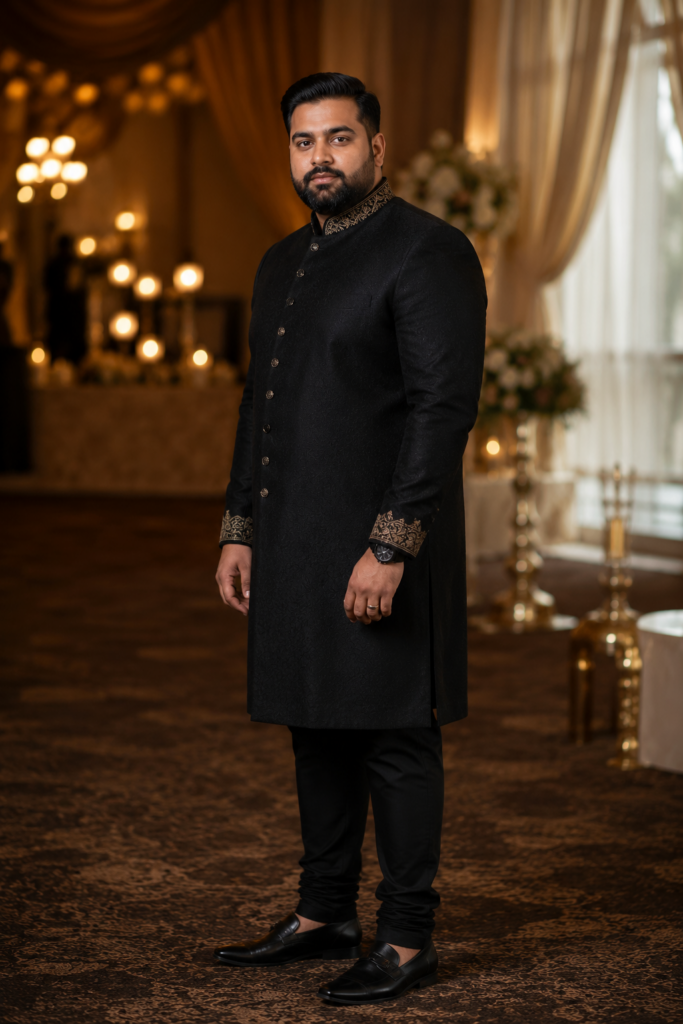
A sherwani is designed for exactly this kind of groom. The long coat-like silhouette falls past the hips and down toward the knee, covering the widest part of the body while adding dramatic vertical length. Black with gold embroidery keeps the look rich without being loud.
Slim churidar trousers bunch slightly at the ankle, which is intentional and traditional, but the slim cut through the leg prevents extra fabric from adding bulk below the waist. The embroidery at the collar frames the face. Gold catches warm indoor light beautifully.
One tip: Make sure the sherwani length hits just above the knee. Too long and it shortens the leg visually. Too short and it loses the elongating effect that makes this silhouette work.
14. Forest Green Suit With a Brown Leather Belt and Matching Shoes
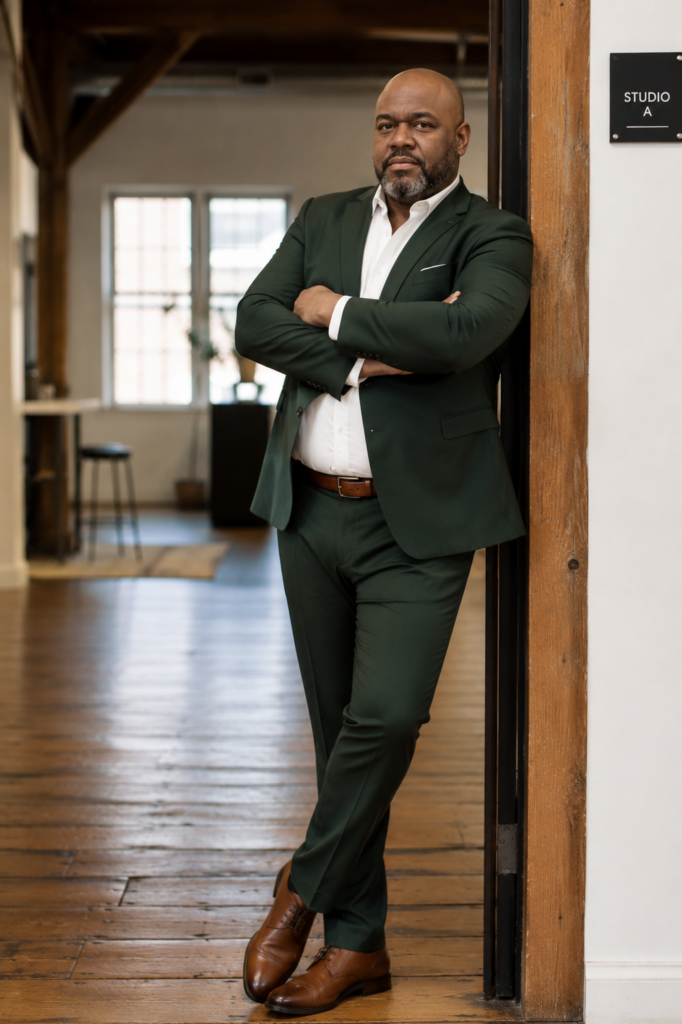
Forest green is one of the most underused wedding suit colors for men. Deep and rich without being as expected as navy, it photographs with real depth in natural light and feels genuinely distinctive on a wedding day. For a heavier groom carrying weight around the midsection, the single-breasted two-button jacket is the right cut.
It creates a clean V opening from lapel to button, which draws the eye upward. Brown leather accessories ground the earth tones together. White shirt keeps the neckline bright and open. The whole combination feels intentional and put-together without trying too hard.
One tip: Match the brown of the belt and shoes exactly. Mismatched brown tones split the visual line at the waist and draw attention to the midsection rather than away from it.
15. Tan Linen Suit With a Sky Blue Linen Shirt
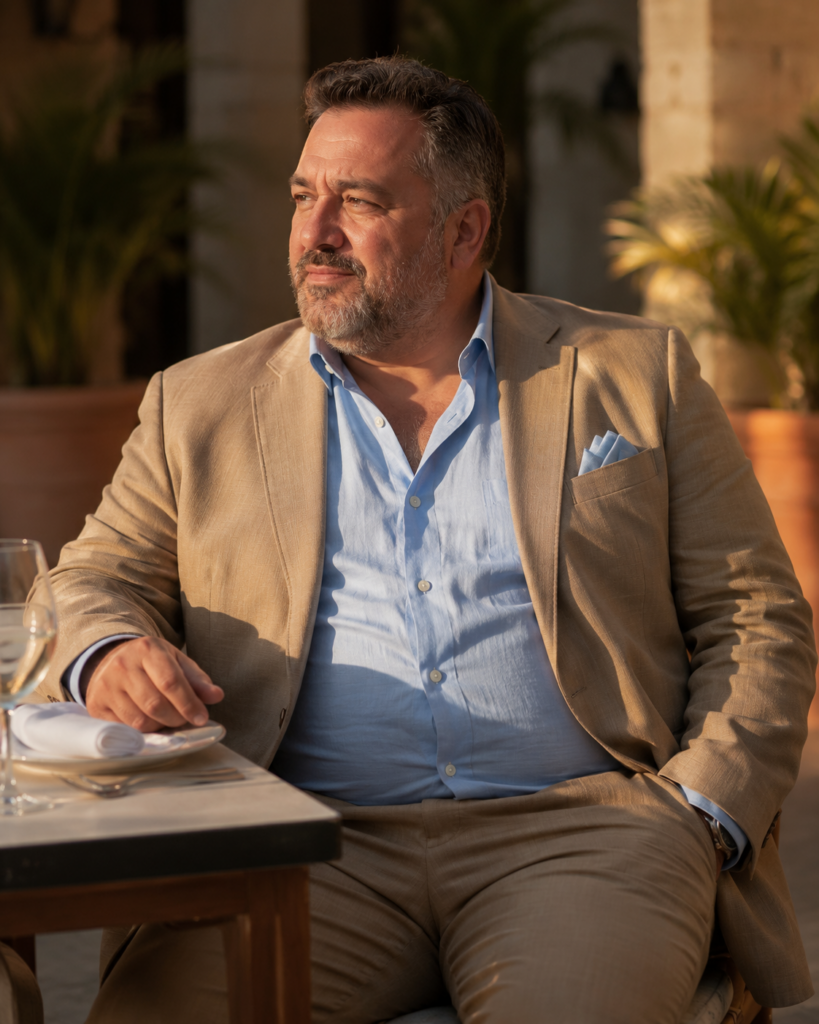
Pairing two relaxed tones, tan and sky blue, keeps a summer wedding outfit from feeling either too formal or too casual. For a shorter, heavier groom, the key challenge is proportion. A tan suit in a shorter man’s correct trouser length, sitting at the natural waist with a clean break at the shoe, prevents the pants from visually chopping the leg.
Linen breathes well through a full day of outdoor heat. The sky blue shirt adds color without disrupting the warm overall palette. An open collar is comfortable and reads as deliberate on a warm-weather wedding day.
One tip: Get the trousers hemmed with a single break, where the fabric just grazes the top of the shoe. No break shortens the leg further. A full stack of fabric does the same.
16. Burgundy Suit With a Black Turtleneck
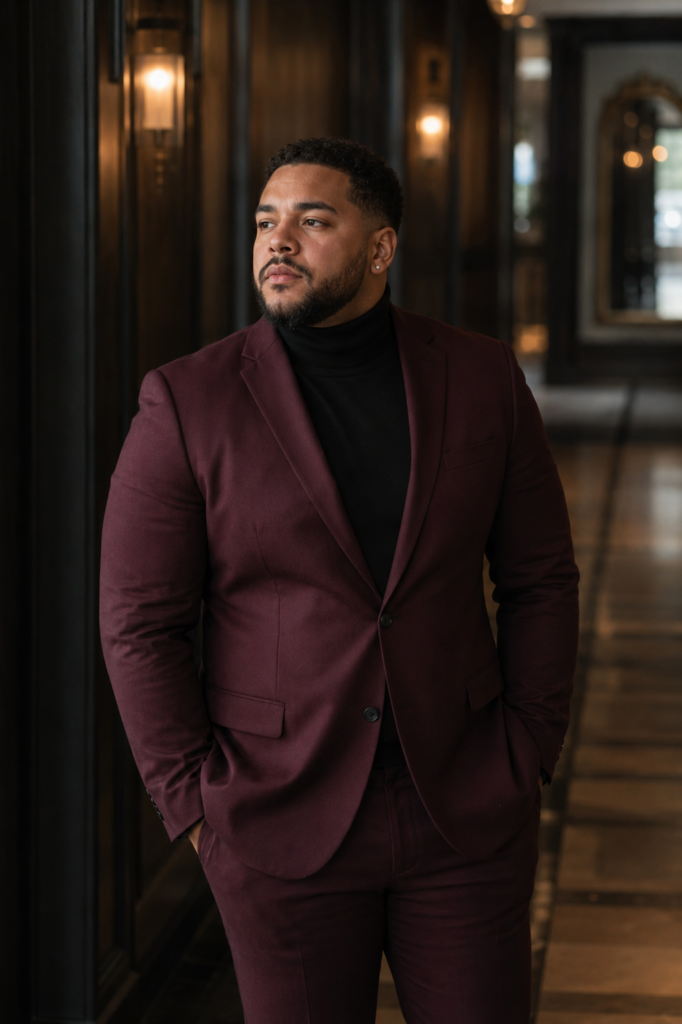
Replacing the dress shirt and tie with a black turtleneck changes the entire character of a suit. The turtleneck covers the neck completely, which removes the collar gap issue that affects many plus size men when wearing standard dress shirts.
It also creates a continuous dark column from chin to trouser waist, which slims the upper body and keeps the eye moving downward. Burgundy over black is a high-contrast combination that photographs well in both warm and cool light. The look reads as fashion-forward without being impractical for a wedding day.
One tip: The turtleneck must fit close to the body without clinging. A loose turtleneck under a suit jacket bunches at the collar and defeats the clean line this outfit depends on.
17. Brown Tweed Three-Piece Suit With an Ivory Silk Tie
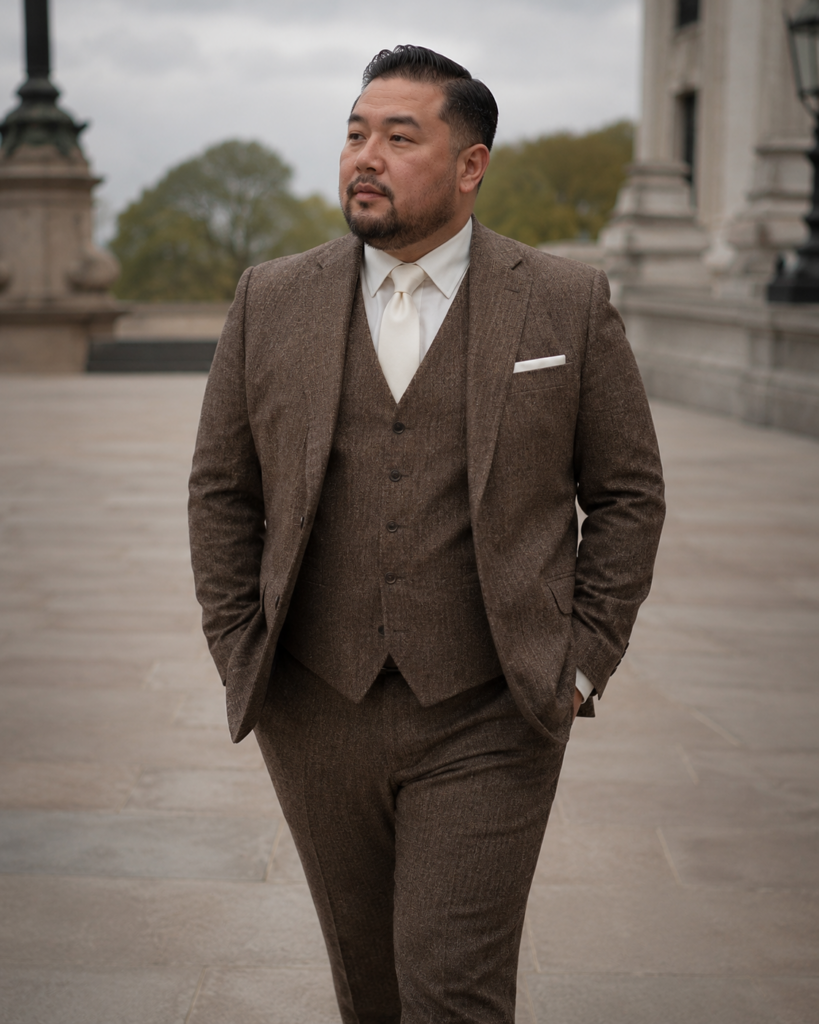
Brown tweed three-piece suits belong in the autumn and winter wedding conversation much more than they currently get. The texture of tweed carries visual interest on its own, which means the outfit does not need much else to look complete.
The waistcoat underneath the jacket keeps the shirt tucked firmly in place all day, which matters for a heavier groom who moves a lot during a reception. An ivory silk tie introduces a soft sheen that catches light without being flashy. The combination of brown, ivory, and white is warm and cohesive without a single color competing against the others.
One tip: Button all five waistcoat buttons except the bottom one. Leaving the last button undone is traditional and also allows more comfortable movement through the hips and midsection.
18. Rust Coloured Suit With a White Linen Pocket Square
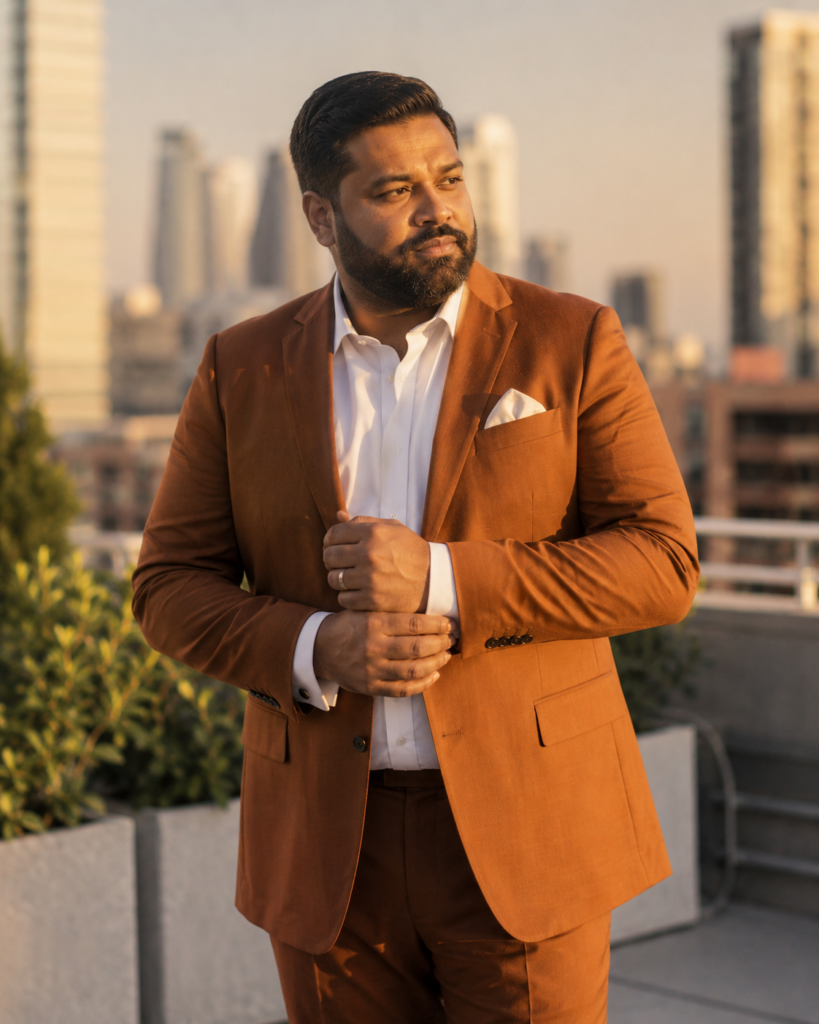
Rust is a bold call. Most grooms default to safe neutrals, which is exactly why rust stands out so well in photographs. On a tall, large-framed man, warm earthy tones like rust work with the body’s natural scale rather than fighting it. The suit needs structure.
A soft, unlined jacket in rust on a heavier frame reads as slouchy rather than relaxed, so go for a half-lined jacket with a firm chest piece. The white shirt and pocket square frame the face without introducing a third color. The whole look is warm, confident, and immediately memorable in wedding photographs.
One tip: Size up one in the jacket chest if you are between sizes with rust. Pulling or stretching across a bold-colored jacket shows far more obviously than it does on navy or charcoal.
19. Grey Pinstripe Suit With a Pale Yellow Dress Shirt
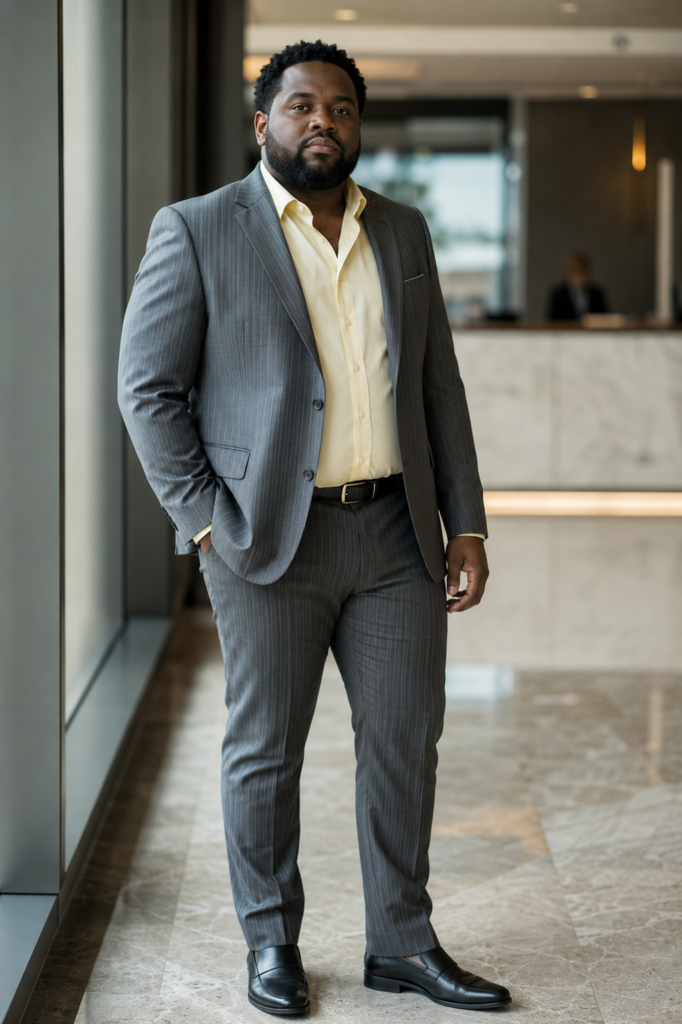
Pinstripes are a direct tool for creating vertical length on the body. The lines run from shoulder to shoe, and the eye follows them downward, reading the body as taller and leaner than a solid fabric would suggest. For a groom carrying weight in the midsection, a mid-grey pinstripe suit in a single-breasted cut with a suppressed waist is one of the strongest choices available.
The pale yellow shirt introduces warmth and a touch of personality without pulling focus. An open collar at the top keeps the look fresh rather than stuffy. The pinstripe does the visual heavy lifting.
One tip: Choose a pinstripe where the lines are spaced at least a centimeter apart. Very fine pinstripes blend into solid grey on camera. Wider spacing keeps the stripe visible and effective in photographs.
20. White Tuxedo Jacket With Ivory Trousers and a Black Bow Tie
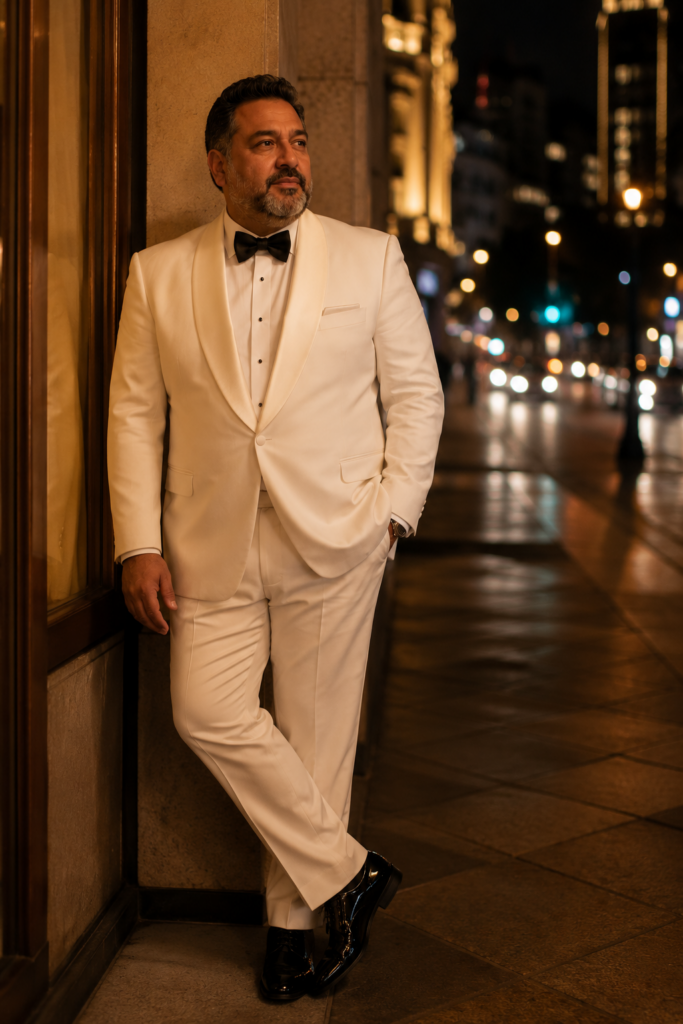
All-light suiting on a heavier man requires confidence and precise fit. When both pieces are light in color, the body’s full silhouette is on display, which means tailoring cannot be skipped or approximated. A white tuxedo jacket with ivory trousers keeps the tones close but not identical, which gives the eye something subtle to follow rather than a flat block of white.
The black bow tie and black shoes anchor the look at top and bottom. Peaked satin lapels add formality and frame the chest strongly. This combination is reserved for evening weddings and works best with strong indoor or ambient lighting.
One tip: Press both pieces separately and check that the white and ivory tones stay distinct under the venue lighting. Some artificial lighting flattens the contrast and makes the two pieces look mismatched rather than intentionally tonal.
What to Wear Under the Suit: Shapewear, Base Layers, and Comfort for a Full Wedding Day
Most grooms spend hours choosing the suit and zero time thinking about what goes under it. That is a mistake. What you wear underneath directly affects how the suit sits, how comfortable you feel, and whether you make it through the reception without wanting to change clothes.
Start with a good moisture-wicking undershirt. Look for a V-neck cut deep enough that it stays hidden below your shirt collar. Cotton holds sweat against your skin all day. A lightweight synthetic blend moves moisture away and keeps you cooler through a long ceremony and reception.
Chafing is real and it ruins days. Compression shorts that reach mid-thigh solve this completely and cost very little. Many heavier men wear them daily anyway, so this is not a dramatic change, just a deliberate one for a high-stakes day.
Shirt stays are worth every penny. These small clips attach your dress shirt to your socks and keep the shirt tucked firmly in place no matter how much you move, dance, or sit through a four-course dinner. No pulling the shirt down every hour.
Shapewear is a personal call. A light compression undershirt can smooth the torso under a fitted jacket, but avoid anything that feels restrictive while seated. Struggling to breathe through your own wedding dinner is not worth a slightly smoother silhouette.
Wear every layer during your final fitting. What fits comfortably at a fitting without base layers may feel tight once you add them back in.