The suit jacket won’t button. Your best pants feel tighter than last month. Walking into that room already feels like the hardest part and you haven’t even said a word yet. Dressing for a job interview or big meeting shouldn’t feel like a battle before the battle.
But finding real outfit advice for bigger guys? Most of it was written for someone else. Slim fits, tailored blazers on 170-pound models… none of it translates when you actually need it to.
Getting dressed with intention changes how you carry yourself. The right look signals competence before you speak. It makes the clothes disappear and lets you show up instead.
These 15 looks were put together with your body in mind, not as an afterthought. Each one is practical, sharp, and built for the moments that actually matter.
1. The Windowpane Check Blazer With Solid Dark Trousers for Senior-Level Meetings
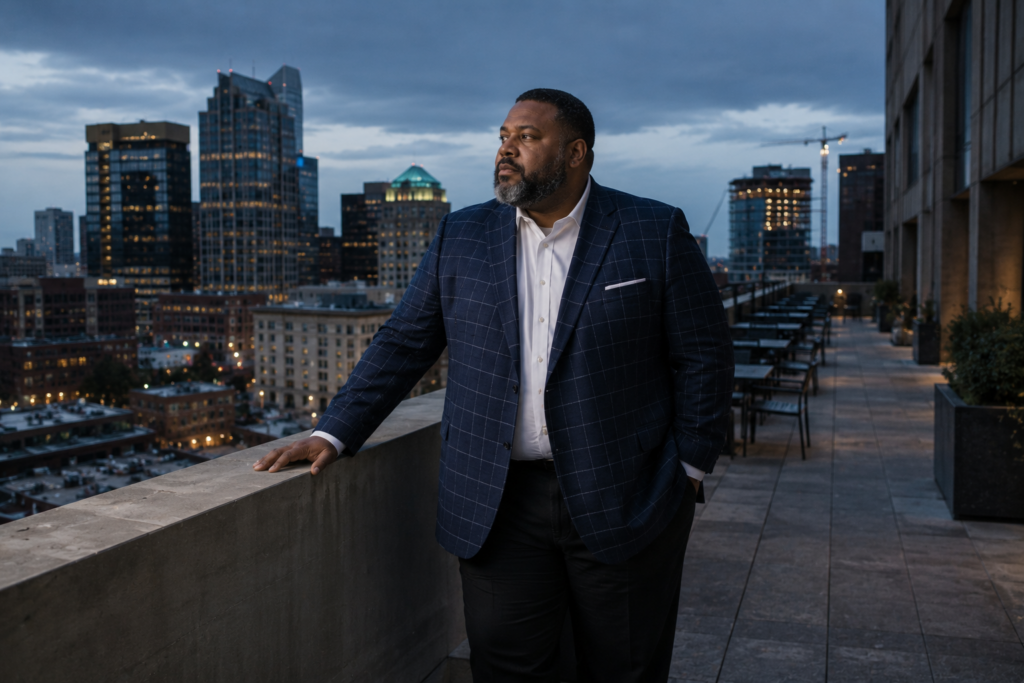
Windowpane check reads as confident and deliberate when everything else is kept solid. The pattern adds visual interest without overwhelming the frame. For bigger men, large-scale patterns work better than small tight ones because they do not create visual noise across a broader surface area. Keep the shirt and trousers plain. Let the blazer do the talking. No tie at this level reads as appropriately senior rather than underdressed, especially when the shirt collar is quality and the blazer fits properly through the chest. The check should be large enough to be read across a boardroom table.
One patterned piece per outfit. That is the rule. Everything else serves the blazer, and the blazer serves the man wearing it.
Save for later 25 Casual Plus Size Men Outfits That Actually Look Stylish
2. The Black Dress Trousers, Tucked Slim-Fit Dress Shirt, and Leather Belt Combination
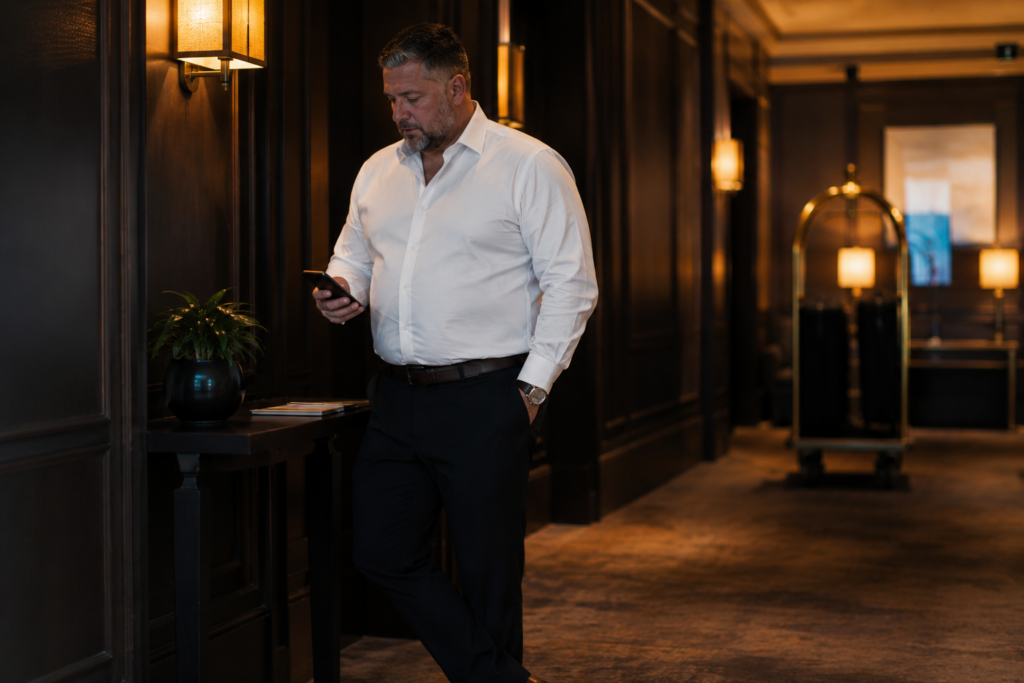
Tucking the shirt in is the single move most bigger guys avoid and the one that actually does the most work. An untucked shirt adds visual mass below the waist. Tucking it in defines the waist, creates a clear line between top and bottom, and makes the whole look read as intentional. The belt needs to match the shoes. Black belt with black shoes. Brown belt with brown shoes. That rule exists for a reason. Slim-fit does not mean tight. It means the fabric follows the body without excess material bunching at the sides.
Most men buy trousers too big in the waist to feel comfortable, then lose the entire silhouette. Go for the right waist size and let a tailor add a half inch if needed.
3. The Stretch Dress Trouser With a Fitted Button-Down and Loafers for All-Day Comfort
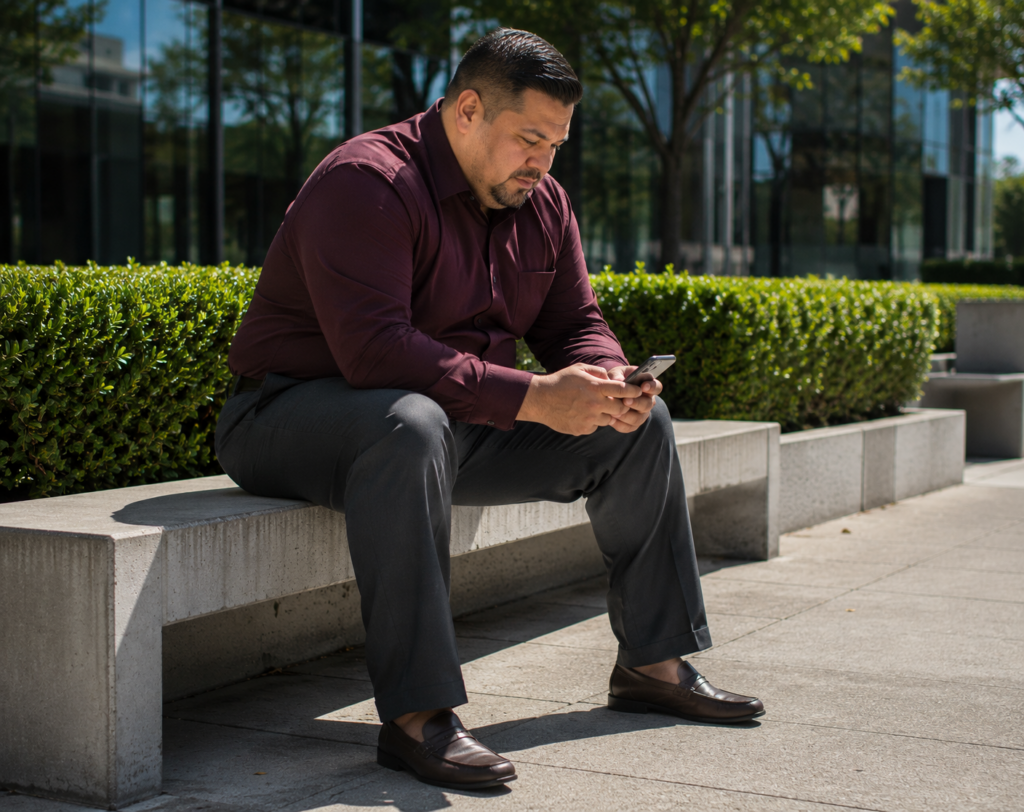
Stretch dress trousers changed what comfort means in a professional context. Traditional wool trousers bind at the thighs and waist after a few hours of sitting. Stretch fabric moves with the body and holds its shape anyway. For shorter and stockier builds, a mid-rise trouser sits where it should without pulling down in the back or bunching under the belly. The burgundy shirt tucked in creates a clear color break at the waist. Loafers without laces keep the ankle area clean and visually lengthen the leg slightly, which matters when the proportions are already compact.
Comfort and appearance are not a trade-off. Stretch dress trousers prove it. Any man wearing regular fit wool trousers to long interviews is making the day harder than it needs to be.
Read also 20 Plus Size Groom Outfits That Are Absolutely Breathtaking
4. The Solid White Dress Shirt With a Tie and Dark Navy Suit for Traditional Industry Interviews
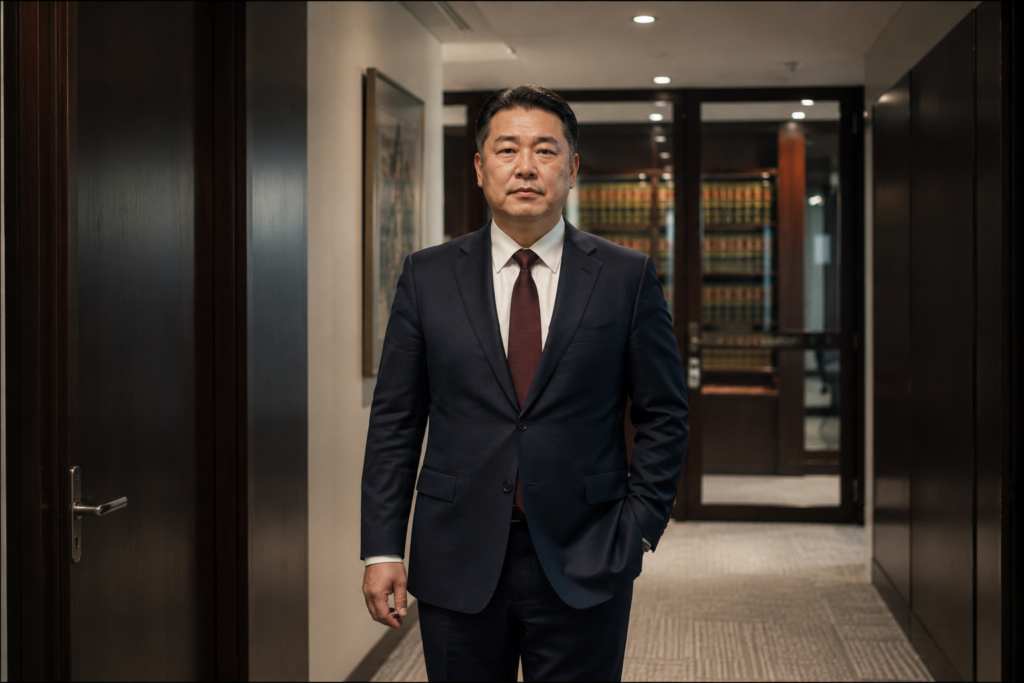
White and navy with a solid tie is the most legible outfit a man can wear into a traditional interview. Law, finance, government, and corporate roles respond to this combination because it signals that the man wearing it understands the environment. The tie length matters. It should end at the middle of the belt buckle. Too short reads as dated. Too long pulls the eye downward and disrupts the proportions of a bigger frame. A solid tie in burgundy or deep red keeps the focus on the face, where it belongs. Nothing competes. Nothing distracts.
In traditional industries, the white shirt and navy suit is not boring. It is correct. Correct is what gets you remembered for what you said, not what you wore.
5. The Navy Structured Blazer With Chinos and White Oxford
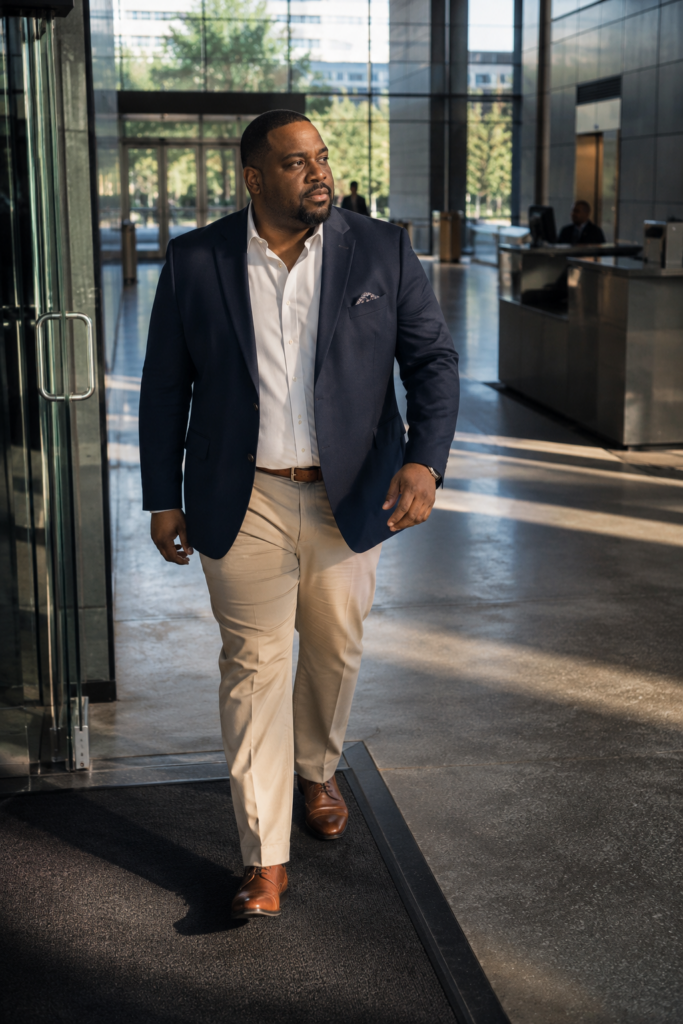
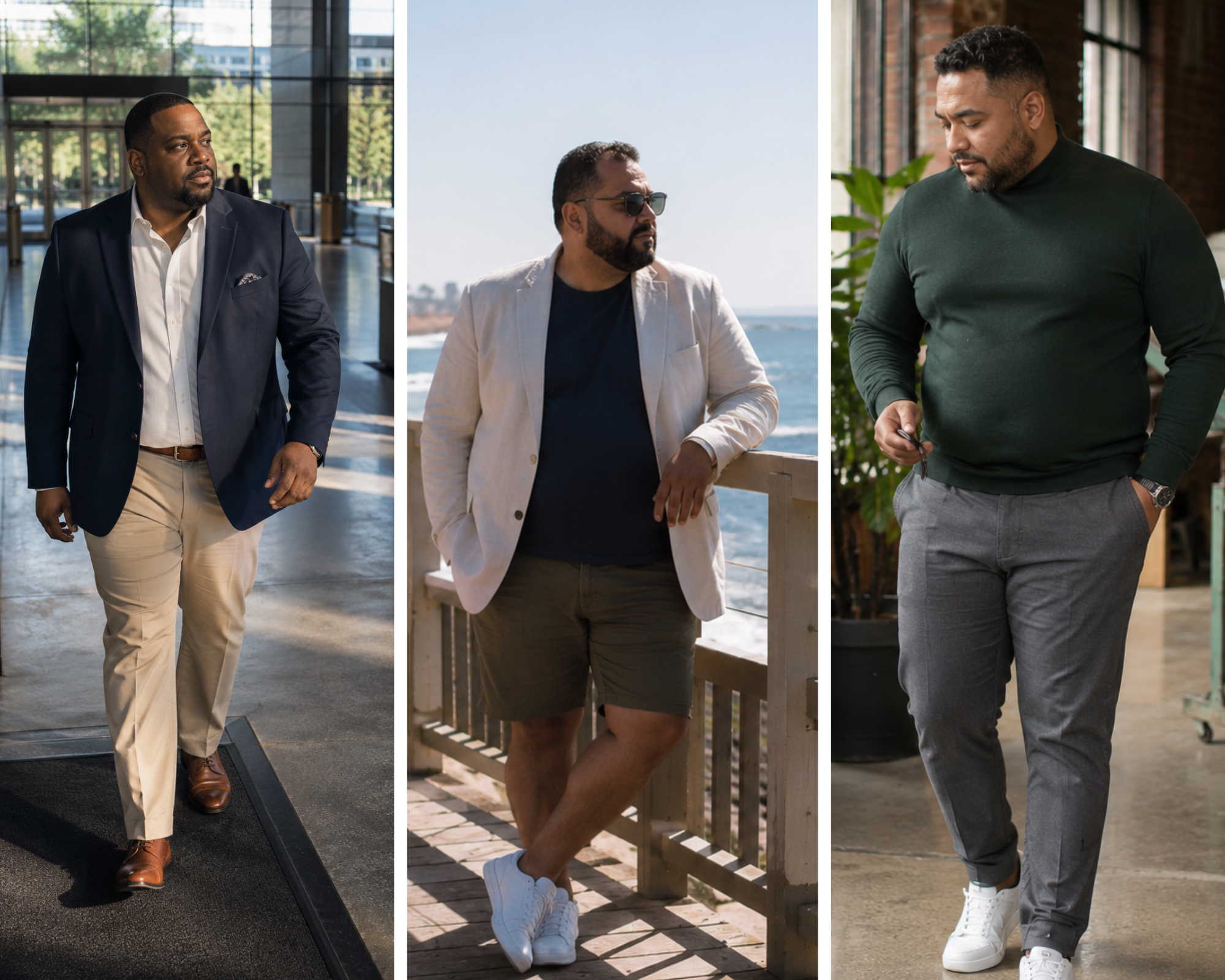
Navy does something specific for bigger guys. It slims without trying to, creates contrast against most skin tones, and reads as serious without being severe. A structured blazer matters more than a soft one here because structure holds its shape across the chest and shoulders, which keeps the silhouette clean instead of pulling or bunching. Chinos in a neutral stone or khaki break the formality just enough for interviews that are not full-suit environments. The white oxford underneath keeps everything legible and sharp.
Skip the unstructured linen blazer for high-stakes moments. Navy and structure together do more for your presence in a room than any trendy color or relaxed fit ever will.
6. The Charcoal Gray Two-Piece Suit With a Spread Collar Dress Shirt
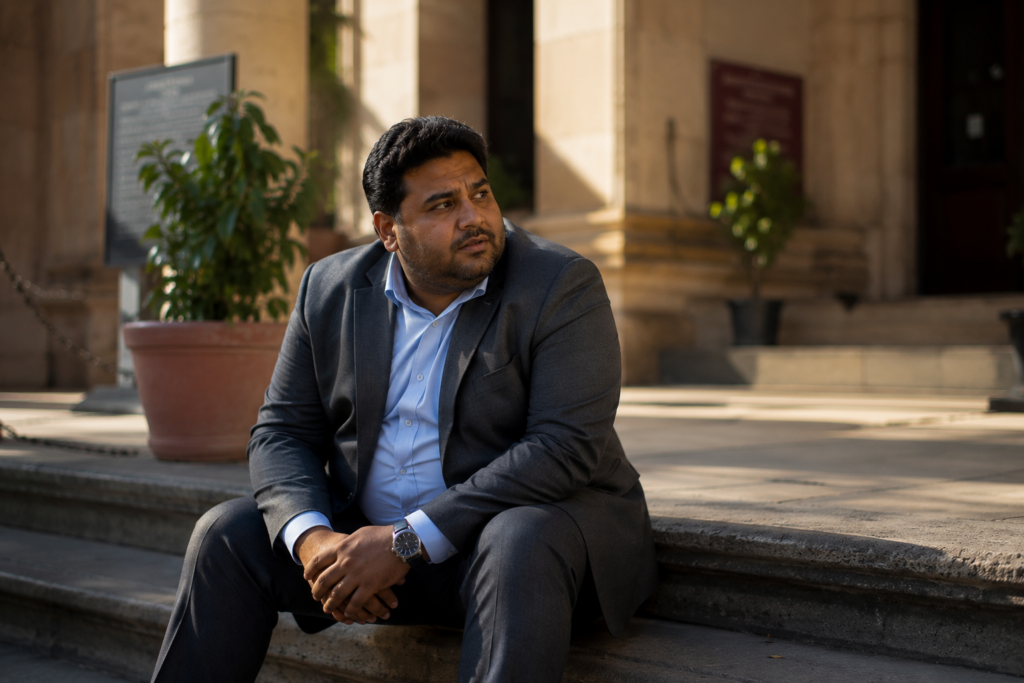
Charcoal gray is the most forgiving suit color for interviews because it photographs well, reads as authoritative across every industry, and does not compete with your face. The spread collar on the dress shirt is worth paying attention to. Wider collar spreads balance a fuller neck and broader face in a way a narrow point collar never manages. Going tieless keeps the look current without losing any formality. The two-piece has to fit through the chest and shoulders first. Everything else can be tailored.
A suit that fits through the chest but gaps at the waist is still a better starting point than one that stretches across the back. Tailors fix waists. They cannot fix pulling seams.
7. The Burgundy Polo With Dark Navy Chinos for Business Casual Interviews
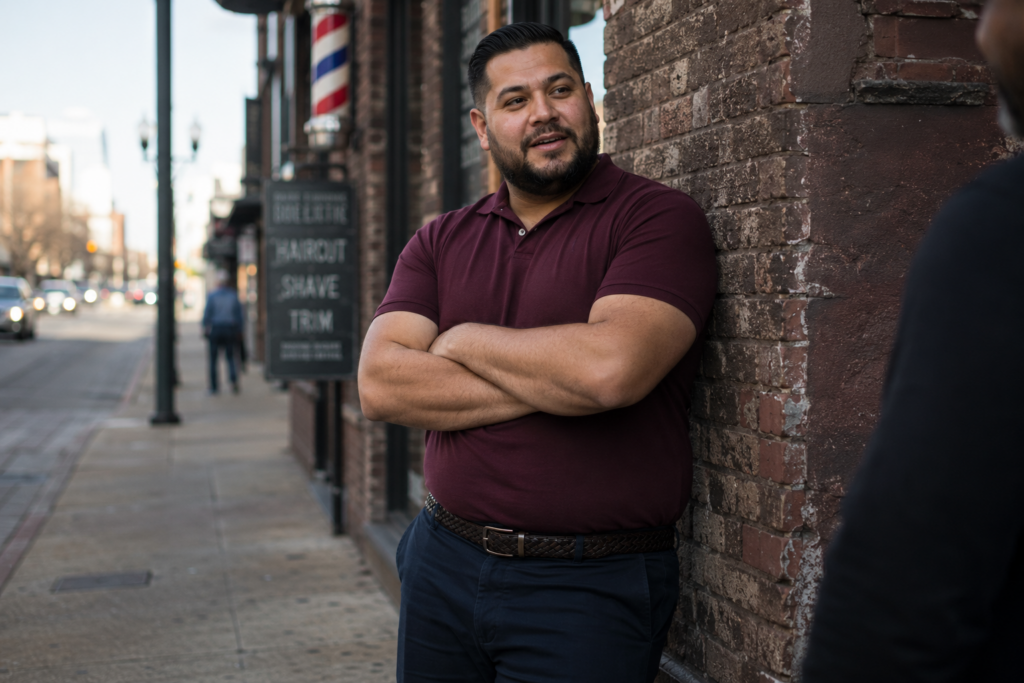
Burgundy works because it is rich without being loud. For a business casual interview, it signals personality while still sitting inside the boundaries of professional. The polo needs to fit through the chest and arms without pulling at the buttons. Buttons pulling open across the chest reads as the wrong size, no matter what the tag says. Dark navy chinos keep the bottom half grounded. Tucking the polo in keeps the proportions clean and prevents the shirt from shortening the leg line, which untucked shirts do to shorter and stockier builds especially.
Burgundy with navy is one of the strongest color combinations a bigger man can wear. It is not talked about enough. Both colors do quiet, serious work without trying to stand out.
8. The Light Gray Dress Shirt With Charcoal Trousers and Oxford Shoes
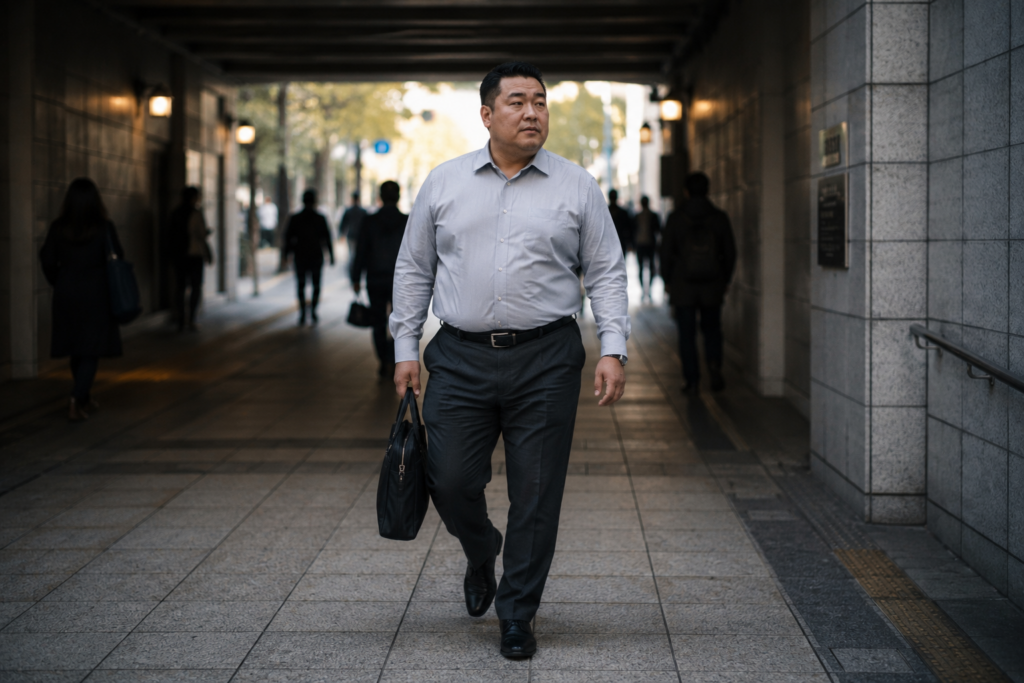
Gray on gray works when the tones are different enough to read as two separate pieces. Light gray shirt against charcoal trousers creates a tonal outfit that feels polished and deliberate. Flat-front trousers matter for bigger midsections because pleats add fabric where there is already enough. The Oxford shoe ties the look together without competing with it. This combination works across finance, law, tech, and government interviews because it carries weight without making a statement. Fit through the shirt’s chest and shoulders is everything. Side seams should hang straight without pulling toward the front.
Tonal dressing is underused by bigger men. When done right, it creates a longer, leaner line from collar to shoe. The key is contrast between the two pieces.
9. The Dark Wash Straight-Leg Jeans With a Tucked Oxford and Blazer for Smart Casual Roles
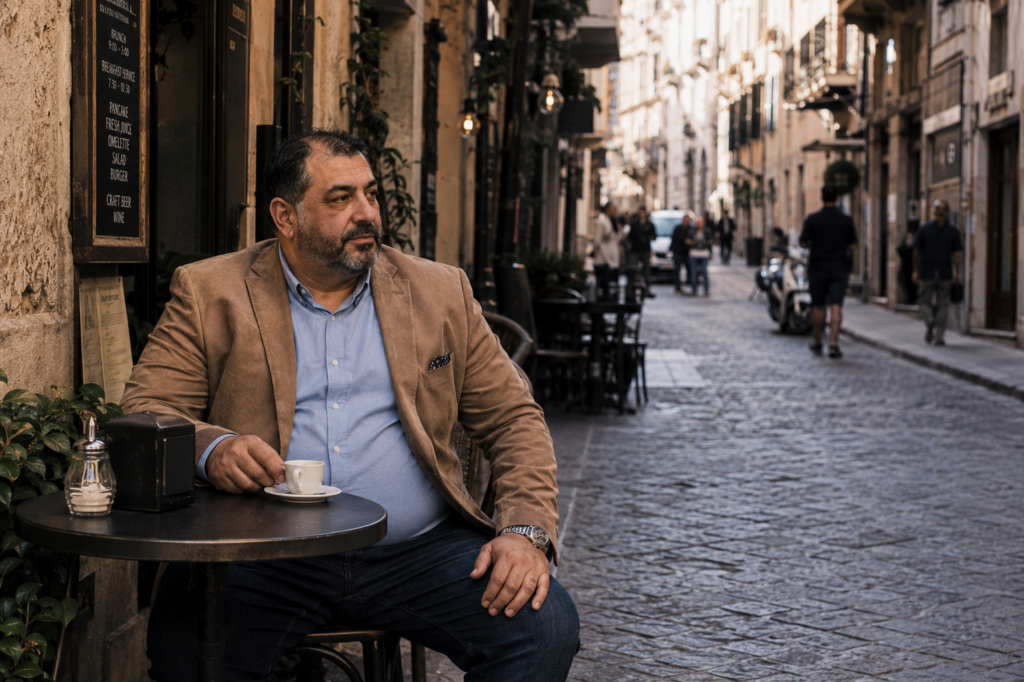
Dark wash jeans hold up in smart casual interviews when the rest of the outfit earns it. The blazer carries the professional weight. The tucked oxford keeps the structure underneath it. What makes this work for bigger builds is the straight leg on the jeans. Tapered jeans create a top-heavy silhouette on fuller frames. Straight leg balances the width of the upper body by keeping a consistent line down through the ankle. The camel blazer over blue and dark denim is a combination that feels considered. Nothing here is trying too hard.
Jeans are acceptable in smart casual interviews if they are dark, clean, free of distressing, and worn with leather shoes. Wear them with anything else and the whole look falls apart.
10. The Fitted Mock-Neck Sweater With Tailored Trousers for Creative Industry Meetings
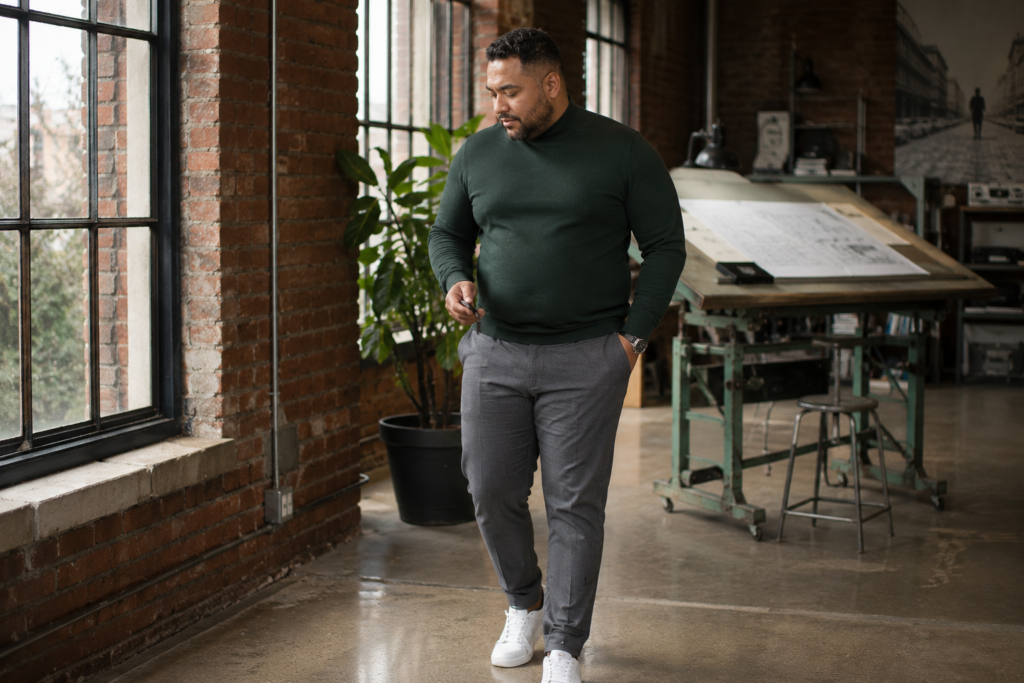
Mock-neck sweaters solve the tie problem without looking like you forgot one. For creative interviews, the absence of a collar reads as intentional rather than underdressed. The key for bigger guys is fit through the torso. Too loose and it reads as shapeless. Too tight and every movement feels visible. The sweater should graze the body without gripping it. Pairing it with tailored trousers pulls the look into professional territory. Clean white sneakers work here because the industry context supports them. In a law firm or bank setting, they would not.
Forest green is a serious color that does not announce itself. Bigger men should wear it more often. It photographs well, pairs with gray and navy, and does not shrink the frame visually.
11. The Olive Chinos With a White Dress Shirt and Tan Suede Loafers for Relaxed Office Cultures

Olive chinos are underestimated in professional settings. They carry more visual weight than beige but stay well inside business casual. Against a white shirt, the contrast is clean and the olive reads as warm rather than military. Slim-straight is the right cut for compact and stocky builds because it avoids the bunching that comes with a regular fit but does not create the pulling issues of a true slim. Suede penny loafers in tan soften the whole outfit. They signal that the look was thought about. The open top button on the shirt keeps the neck comfortable and the vibe relaxed without sacrificing professionalism.
White and olive together is a combination that works on every skin tone. It is simple, it is clean, and it never reads as trying too hard.
12. The Three-Piece Suit in Mid-Gray With a Pocket Square for High-Stakes Interviews
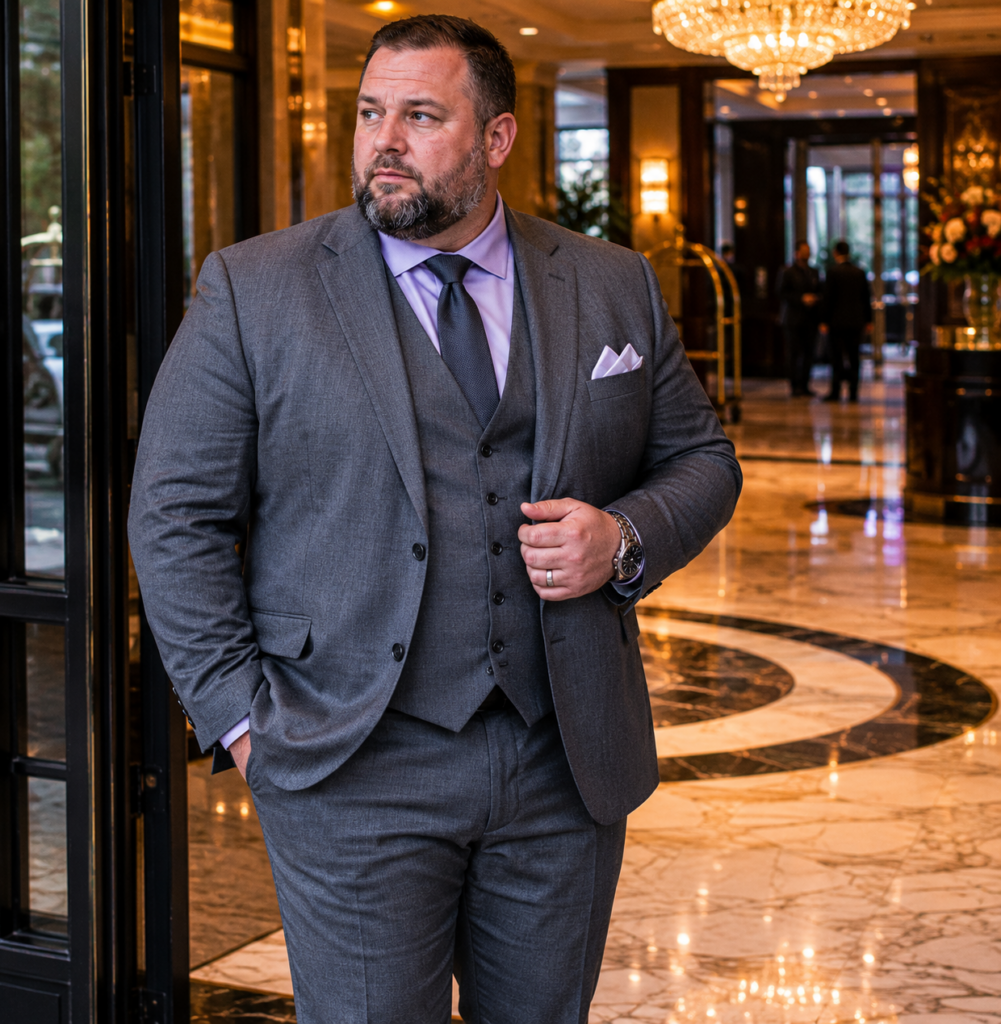
The waistcoat in a three-piece does something a two-piece cannot. It covers the shirt at the waist, which means no bunching, no untucking risk, and a cleaner line across the midsection throughout a long interview or meeting. For bigger men, that alone is worth it. The pocket square is a small signal with a large impact. A clean white flat fold reads as classic and intentional without being showy. Pale lilac under mid-gray adds just enough color without interrupting the formality. This combination works at senior-level interviews, partner-track meetings, and any room where the stakes are real.
Three-piece suits were made for this body type. The waistcoat distributes the visual weight evenly and creates a structured silhouette that a two-piece jacket alone rarely achieves.
13. The Slim-Straight Dark Denim With a Tucked Black Turtleneck for Tech and Creative Interviews
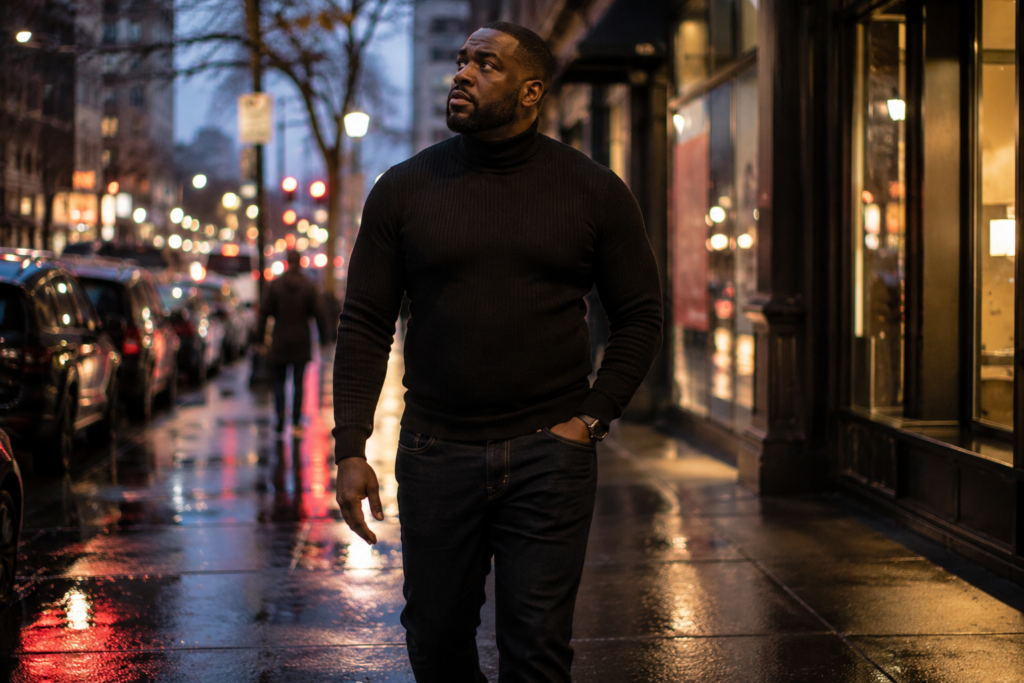
Black on dark denim is a combination that reads as intentional rather than casual when the fit is right. The turtleneck removes the collar question entirely. No tie, no open button, no decision to make. For broader shoulders and a full chest, a fitted turtleneck creates a clean vertical line from chin to waist. Front-tucking adds waist definition without the full tuck commitment. Slim-straight denim keeps the lower half proportional to the upper body. This combination works specifically for tech, design, media, and startup interviews where a suit would feel misread.
Black turtleneck and dark denim is a complete outfit. No blazer needed, no accessories required. The simplicity is the point, and the fit does all the work.
14. The Camel Overcoat Over a Navy Suit for Winter Interviews and Board Meetings
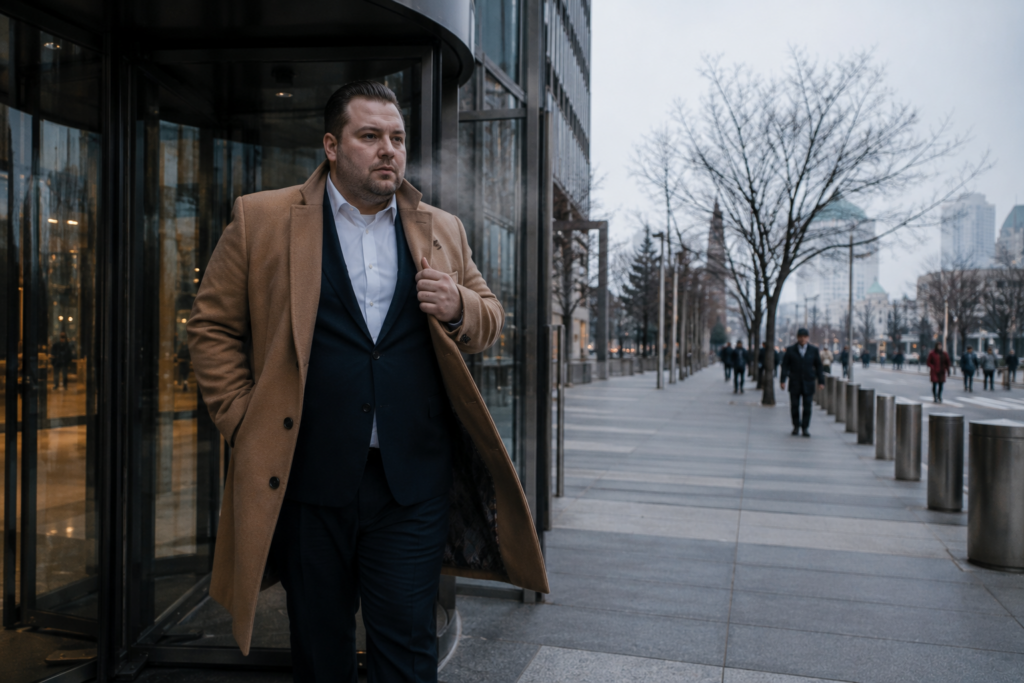
Length matters more than most men realize with overcoats. A coat that hits at or just below the knee creates a long vertical line that works with a bigger frame rather than against it. Camel over navy is one of the strongest color pairings in professional dressing. The warmth of the camel against the depth of the navy creates contrast without conflict. For bigger builds, the overcoat should never be belted. Leaving it open keeps the line clean and avoids drawing attention to the midsection. Under it, the suit does its own work. The coat just needs to hang right.
A well-fitted overcoat is the most powerful outerwear investment a bigger man can make. It carries the entire look from the parking lot to the boardroom without a single compromise.
15. The Relaxed Linen Blazer With Tailored Shorts and Clean White Sneakers for Warm-Weather Casual Interviews
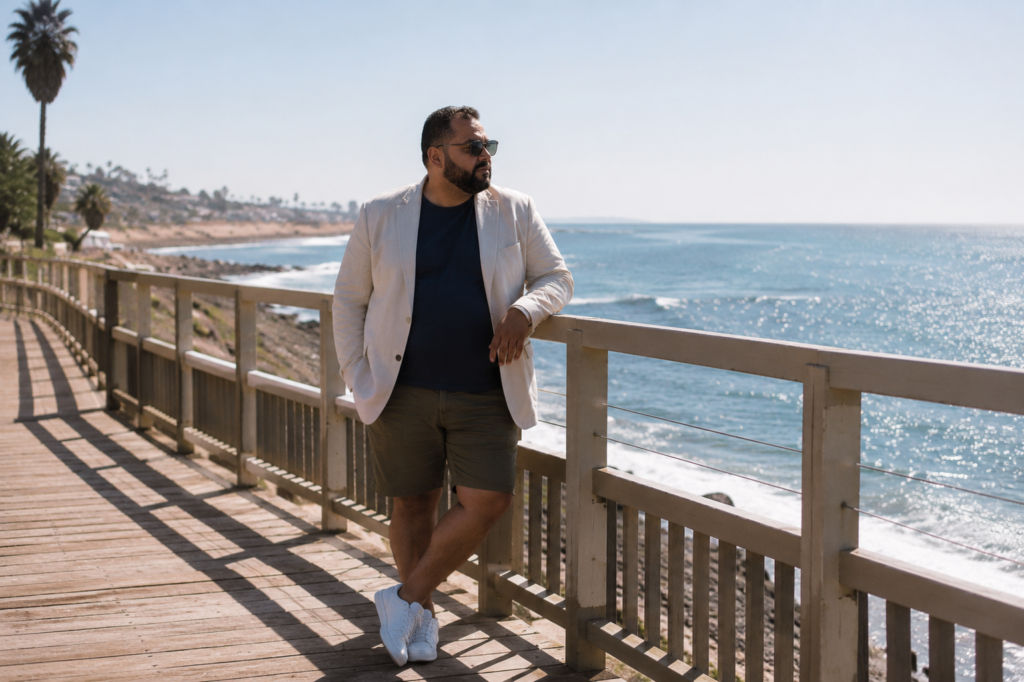
Linen in warm weather is not a compromise. It is the right material for the conditions. Unstructured linen blazers work for bigger frames because they do not pull across the back the way structured blazers do in heat. The key is keeping the rest of the outfit tight in terms of fit, not volume. A fitted crew-neck tee underneath removes the collar formality while keeping the layering clean. Tailored shorts with a proper inseam, somewhere around nine inches, read as intentional rather than casual. White sneakers ground the whole look without weighing it down.
Warm-weather interviews exist. Dressing for the climate while staying sharp is a skill. This combination handles both without asking the man wearing it to choose between comfort and credibility.
The Shoes and Belt Rule That Bigger Men Cannot Afford to Get Wrong
Most men stop at matching the belt to the shoe color. That is the beginning, not the end.
Shoe shape changes how tall you look. A rounded or square toe cuts the leg line short because it creates a visual stop at the foot. Pointed and slightly elongated toe shapes extend the leg line downward, which adds perceived height and balances a broader upper body.
For the suit looks in this article, a cap-toe Oxford or a sleek Derby with a slightly tapered toe does this work without looking fashion-forward in a room that does not call for it.
Sole thickness matters too. Chunky rubber soles on dress shoes pull the eye downward and add visual weight at the ankle. Leather soles, or slim rubber soles, keep the foot looking proportional to the rest of the outfit.
Belt width follows the same logic. A wide belt draws a horizontal line across the widest part of most bigger men’s bodies. Stick to a belt between 1.1 and 1.3 inches wide. Anything beyond that fights the vertical line every other part of the outfit is trying to create.
For the chino and blazer combinations in this article, a loafer in dark brown or black works better than a lace-up. Loafers keep the ankle area clean and uninterrupted, which reads as a longer leg.
Get the shoes right and the whole outfit lands. Get them wrong and nothing above the ankle saves it.