pilot training in nigeria and their fees
If you think becoming a pilot in Nigeria is just about “passion” and “vision,” you are dreaming. Let’s be real: aviation is a rich man’s game, especially in a country where the Naira is constantly doing gymnastics against the Dollar.
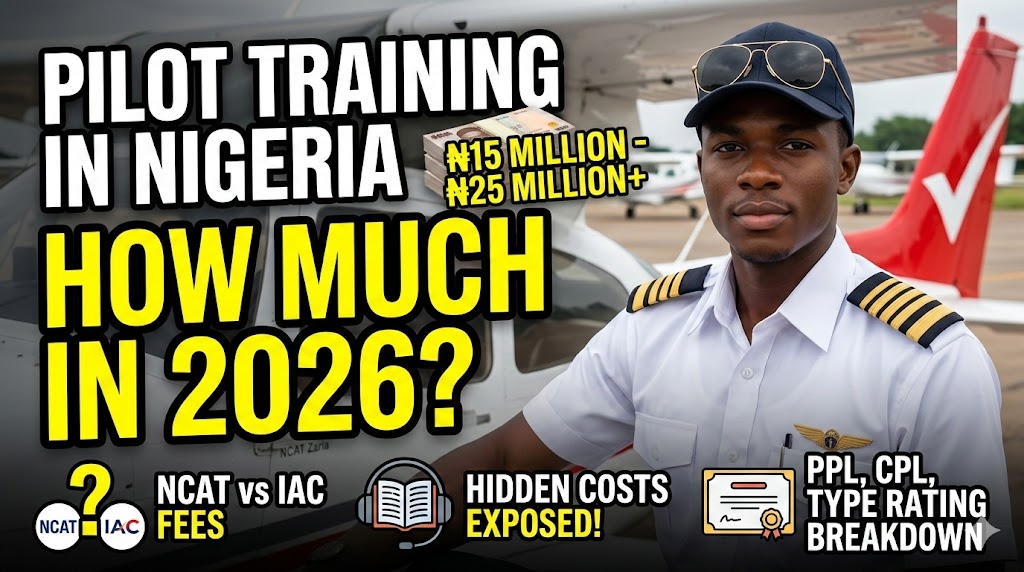
Most people tell you that “the sky is the limit,” but they forget to mention that the gate fee to reach that sky is currently priced in tens of millions of Naira. Pilot training in nigeria and their fees have become a major talking point because the costs have skyrocketed over the last three years. If you don’t have a solid financial plan or a very wealthy sponsor, your pilot dreams will stay grounded on the runway.
-
Nigerian College of Aviation Technology (NCAT), Zaria
-
International Aviation College (IAC), Ilorin
-
Landover Aviation Business School (LABS)
-
International Flight Schools (The Abroad Option)
-
Student Pilot License (SPL) Requirements
-
Private Pilot License (PPL) Training
-
Commercial Pilot License (CPL) with Multi-Engine Rating
-
NCAA Medical Certificates and Exams
-
Type Rating Costs
-
Hidden Costs: Books, Uniforms, and Feeding
The Truth About Pilot Training in Nigeria and Their Fees
Think about it: flying a plane is not like learning how to drive a Keke Napep. Every hour you spend in the air consumes aviation fuel, which is imported and priced according to global oil markers. This is why the cost of training moves whenever the exchange rate moves. Here is a breakdown of what you are actually looking at in the Nigerian market today.
1. Nigerian College of Aviation Technology (NCAT), Zaria
NCAT is the “Harvard” of aviation in Nigeria. It is a government-owned institution, which theoretically should make it cheaper, but don’t let that fool you. Because it is the most recognized, the competition to get in is fierce. For a standard Commercial Pilot License (CPL) course, which usually includes your Instrument Rating (IR) and Multi-Engine (ME) rating, you should be looking at anywhere between 12 million to 15 million Naira.
Here’s the thing: while NCAT is prestigious, their sessions can sometimes be delayed due to weather or maintenance issues. You might go in expecting to finish in 18 months and end up spending two years. However, their official training programs remain the gold standard for anyone looking to fly for major local airlines like Air Peace or United Nigeria.
2. International Aviation College (IAC), Ilorin
If you want a slightly more “private” feel with potentially faster turnover, IAC Ilorin is the other major player. The state government established this school to bridge the gap left by NCAT. Their fees are generally higher because they operate with a more commercial mindset. You can expect to pay between 15 million to 22 million Naira for a full pilot training package.
The truth is, many students prefer Ilorin because the processing time for flight hours is often more predictable. You are paying for speed. If you have the cash and want to get into the cockpit of a Boeing or Airbus quickly, this is a viable route. Just ensure you verify their current accreditation status with the Nigerian Civil Aviation Authority (NCAA) before you drop a single Kobo.
3. The Hidden Costs of NCAA Licensing
Many aspiring pilots budget for tuition but forget the “small-small” money that adds up. Before you even start, you need a Class 1 Medical Certificate. This isn’t your regular malaria test at a local chemist. You have to visit an NCAA-authorized medical examiner.
You will pay for:
-
Medical examinations: Roughly 100,000 to 200,000 Naira depending on the facility.
-
English Proficiency Tests: Yes, you must prove you can speak clear aviation English.
-
License Processing Fees: Every time the NCAA breathes on your file, there is a fee.
-
Personal Equipment: You’ll need a good headset (like a Bose or David Clark), which can cost $500 to $1,100. At the current black market rate, that is a huge chunk of money.
4. Why the Fees Keep Changing
Let’s be honest: the volatility of the Naira is the biggest enemy of pilot training in nigeria and their fees. Aircraft parts are not made in Aba; they are imported. Maintenance is done in Dollars. Even the instructors often demand salaries that reflect the current economic reality.
If a school quotes 15 million Naira today, they might add a “fuel surcharge” or “inflation adjustment” six months later. If you are planning this journey, always keep a 20% buffer fund. Do not start pilot school with exactly what is on the brochure, or you will get stuck halfway through your Private Pilot License (PPL) and won’t be able to graduate to CPL.
5. Type Rating: The Final Hurdle
Getting your CPL is just the beginning. It only proves you can fly a small, single-engine or twin-engine plane. No major airline will put you in a Boeing 737 just because you have a CPL. You need a Type Rating. This is specialized training for a specific aircraft.
Most Nigerian pilots have to go to the US, Dubai, or Europe for this because we lack enough simulators locally. This can cost another $15,000 to $30,000. Some lucky pilots get “bonded” by airlines where the company pays for the training and deducts it from their salary over 3-5 years. But in this current economy? Those deals are getting harder to find. You have to be exceptionally good or well-connected.
Essential Advice for Aspiring Nigerian Pilots
-
Verify Accreditation: Never pay fees to any “aviation school” that isn’t fully cleared by the NCAA for flight training. Some schools only offer ground school (theory) but can’t get you in the air.
-
Fix Your Finances First: Unless you have the full amount or a guaranteed loan, don’t start. Aviation is a “perishable” skill; if you stop training for six months because of money, you will need extra hours to get back to standard.
-
Network Like Crazy: In Nigeria, your certificate gets you the interview, but your network gets you the “type rating” slot. Join aviation forums and stay close to industry veterans.
Frequently Asked Questions
How much does it cost to become a pilot in Nigeria in 2026?
The total cost for a Commercial Pilot License (CPL) currently ranges between 15 million and 25 million Naira, depending on the school and the current cost of aviation fuel. This does not include Type Rating or specialized simulator training.
How long does pilot training take in Nigeria?
Ideally, it should take 18 to 24 months. However, factors like aircraft maintenance, instructor availability, and weather conditions in places like Zaria or Ilorin can extend this to 3 years.
Can I work as a pilot in Nigeria with a foreign license?
Yes, but you must perform a License Conversion through the NCAA. This involves passing Nigerian air law exams and a check-ride with an NCAA examiner to ensure you understand local international aviation standards.