
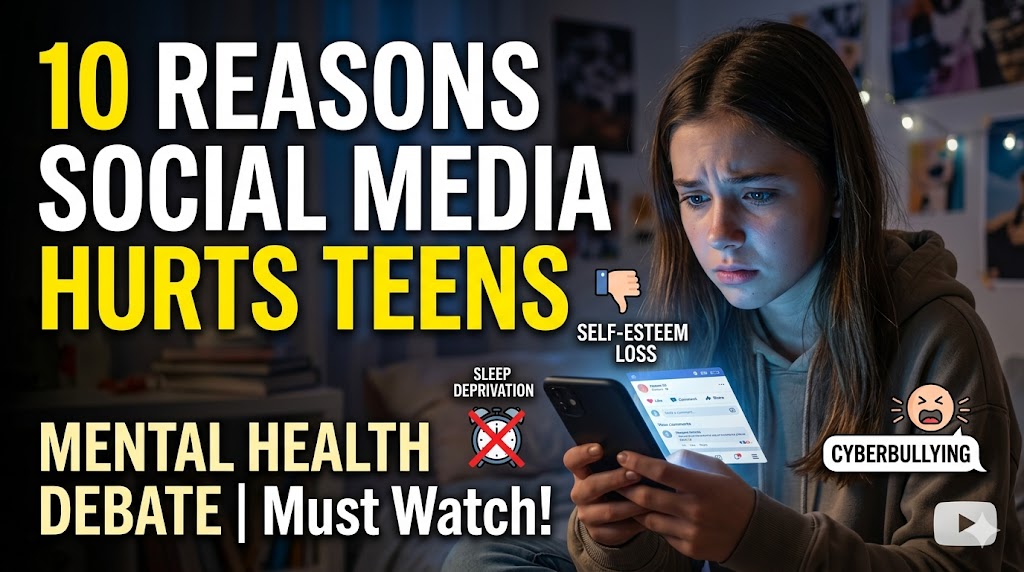
Think about the last time you saw a group of teenagers sitting together in a park. Were they talking? Or were they all staring at their palms, illuminated by the glow of a smartphone? We used to worry about what kids were doing “out there” in the world. Now, the biggest risks are coming from inside their pockets.
While some people claim these platforms keep us connected, the evidence shows a different reality. The digital world is often a distorted mirror. It creates a space where “likes” determine self-worth and algorithms decide your mood. When we analyze the impact of social media on teenagers’ mental health, we see a clear pattern of rising anxiety, loneliness, and shattered self-esteem that cannot be ignored.

1. The Constant Trap of Social Comparison
Teenagers are at a stage where they are trying to figure out who they are. Social media forces them to compare their “behind-the-scenes” lives with everyone else’s “highlight reels.” They see peers at parties, on vacations, or looking perfect in edited photos. This creates a deep sense of inadequacy.
While proponents say this is just “inspiration,” it actually functions as a toxic yardstick. A teenager doesn’t see the twenty failed photos it took to get that one perfect shot. They just see a standard they can never reach. This constant comparison is a primary driver in the impact of social media on teenagers’ mental health, leading to chronic dissatisfaction with their own lives.
2. Cyberbullying and the Loss of Safe Spaces
In the past, school ended at 3 PM. If a child was bullied, home was a sanctuary. Today, the bully follows the victim into their bedroom through their phone. Cyberbullying is persistent and often anonymous, making it much harder to escape or combat.
Statistics show that harassment online can lead to severe depression and even suicidal ideation. Unlike a face-to-face argument, digital abuse can be screenshotted, shared, and kept alive forever. This relentless pressure makes it impossible for many young people to find peace in their own homes.
3. The Destruction of Healthy Sleep Patterns
Sleep is the foundation of mental well-being, especially for a developing brain. Many teens stay up late scrolling through feeds, driven by the fear of missing out. The blue light from screens also messes with melatonin production, making it harder to fall asleep even after the phone is put away.
When you lose sleep, your emotional regulation breaks down. You become more prone to mood swings and stress. Experts note that poor sleep hygiene linked to screen use is a major factor in the spike of teen anxiety disorders. If they aren’t sleeping, they aren’t healing.
4. The Dopamine Loop of Digital Validation
Social media platforms are designed like slot machines. Every like, comment, or share triggers a small hit of dopamine in the brain. For a teenager, this creates a literal addiction to external validation. Their happiness becomes tied to a number on a screen.
When a post doesn’t get “enough” likes, it feels like a personal rejection. This fragile ego-system is a huge part of the impact of social media on teenagers’ mental health. It trains kids to value the opinions of strangers and distant acquaintances over their own internal sense of value.
5. Erosion of Genuine Social Skills
Communication is about more than just words. It involves tone, body language, and eye contact. By spending hours behind a screen, teenagers are losing the ability to read these subtle human cues. Digital “friendships” are often wide but very shallow.
It is much easier to send a heart emoji than to sit with a friend who is crying. When teens rely on apps for interaction, they miss out on the deep, messy, and rewarding work of building real-world relationships. This lack of true connection often leads to a profound sense of loneliness, even when they have thousands of followers.
6. The Rise of FOMO and Social Anxiety
The “Fear of Missing Out” isn’t just a catchy acronym. It is a genuine source of distress. Seeing a group of friends hanging out via an Instagram Story can trigger feelings of exclusion and panic. It makes teens feel like they are constantly on the outside looking in.
Before social media, if you weren’t invited to a movie, you might not even know it happened. Now, you get a front-row seat to your own exclusion. This constant stream of “proof” that others are having more fun creates a baseline of social anxiety that is hard to shake.
7. Body Image Issues and Filtered Reality
Apps like Instagram and TikTok have popularized “beauty filters” that slim faces and smooth skin. This has created a generation of kids who are uncomfortable with their own natural faces. The impact of social media on teenagers’ mental health is often seen in the rise of body dysmorphia.
When every image a teen sees is digitally altered, they forget what a normal human body looks like. They begin to view their own pores, scars, or weight as “failures” rather than just being human. This obsession with a filtered reality has led to an increase in eating disorders and elective cosmetic procedures at younger ages.
8. Shortened Attention Spans and Brain Fog
Most social media content is designed to be consumed in seconds. Fast-paced videos and endless scrolling reward the brain for constant switching. This makes it incredibly difficult for teenagers to focus on “slow” tasks like reading a book or finishing a math problem.
This cognitive overload leads to frustration and a sense of being overwhelmed. When a teen can’t focus, their school performance often drops, which then adds more stress and anxiety to their lives. It is a cycle that starts with a “quick check” of an app and ends in a total loss of concentration.
9. Exposure to Extremism and Harmful Content
Algorithms are built to keep you watching, and often, they do this by pushing more extreme content. A teen looking for fitness tips might quickly find themselves served content about extreme dieting or “pro-ana” communities.
The lack of effective moderation means that harmful trends and challenges can spread like wildfire. Vulnerable minds are easily influenced by these radical ideas. Without the life experience to filter what they see, many teens end up in digital rabbit holes that encourage self-harm or toxic worldviews.
10. The Displacement of Physical Activity
Every hour spent on a phone is an hour not spent being active. Physical exercise is one of the best ways to fight depression and boost mood. Social media has replaced sports, hiking, and even just walking around the neighborhood for many young people.
This sedentary lifestyle has a direct physiological effect on the brain. When we talk about the impact of social media on teenagers’ mental health, we have to mention the lack of movement. A body that stays still for hours in a dark room is a body that is more likely to host a mind filled with anxiety and lethargy.
Conclusion
We cannot keep pretending that the digital world is a harmless playground. It is a powerful environment that is reshaping the brains and hearts of our youth. From the trap of comparison to the loss of sleep and the rise of cyberbullying, the evidence is overwhelming. The impact of social media on teenagers’ mental health is a challenge that requires our immediate attention. We need to encourage more face-to-face interaction and less screen-to-face scrolling. The mental health of an entire generation depends on our ability to put the phones down and look each other in the eye again.